Showing posts with label civilization. Show all posts

Wednesday, October 31, 2018

Comfortably Numb with an Infected Humanity by Michael O’Malley


In a world where helpless civilians are constantly mutilated by poisonous gas, people are bullied to the point of resorting to suicide, and children are being ripped apart by bullets flying through their classrooms, it is easy for faith in humanity to be cloaked in clouds of hopelessness and sorrow. However, even in the darkest of times, light can be found. For instance, after tragedies meant to disband people and destroy hope—like the plane hijackings of September 11th, 2001, the Parkland High School shooting, and the Boston Marathon bombings—people did not give in to fear and let their hope be destroyed. They decided instead to continue living their lives as normal and band together to comfort each other, showing humanity’s natural inclination to aid one another. What about the people who commit these acts of terror? While it may be easy to conclude that they are naturally evil, bad people, this is not the case. These “bad guys” are simply sick, broken people. Broken by what exactly? The answer is simple, yet it is hidden in plain sight: civilization. The minds and souls of people are constantly being contaminated by flawed civilizations which function around unnecessary competition and determine your worth according to how much physical stuff you have. The film Swept Away, directed by Lina Wertmuller, focuses on the ways that civilization can destroy a person and shows what happens when someone’s humanity becomes ill. Wings of Desire, directed by Wim Wenders, focuses on the contrary, however, and shows not how civilization can destroy people but how little efforts to restore humanity to its natural state can make a big difference. Swept Away and Wings of Desire convey that humanity is not broken in nature, but instead is diseased by the unwritten behavioral constraints of society which idolizes a “power to prevent” lifestyle and demands that material wealth and socio-economic competition the supreme aim of life. This illness can be cured.


The idea that humanity is naturally good is proven to us every day in our own lives. For example, as I was sitting in Hofstra University’s Student Center, I was reading an article about a school being shot up during a gun-protest walkout and began to doubt my faith in humanity. How could humanity possibly be naturally good if whenever people try to make a difference it is immediately shot down? After convincing myself there is no hope for a cure, I packed up my things and began to leave. As I was walking away, a random lady stopped me and handed me a meal voucher, saying “Go get yourself a lunch; it’s free.” It was at this moment that I realized I had been wrong for concluding humanity is evil because everywhere there are people who naturally feel inclined to help each other, even if they are strangers. Not only from this did I learn that humanity must be naturally good, and it is just plagued by civilization, but I also discovered that my mind had been transformed by society. My initial reaction to this stranger doing the right thing was that I did not need a voucher because I already had a dining plan of my own. However, before I could decline her offer, I stopped myself, realizing that my mind had been taught to think in a materialistic way; my immediate behavior was to ask myself, “Can this benefit me?” By thinking in a selfish and materialistic way we as people not only prevent ourselves from curing humanity but prohibit others as well by putting them down for trying to help others.


The concept that the flaws of civilization disease humanity is also often featured in today’s music and cinematography. In modern music, such as Jon Bellion’s song New York Soul (Part ii), we are warned not to adhere to civilization’s unfair and destructive “power to prevent” rules. Bellion delivers a message for all of the kids who are being raised in psychologically and spiritually damaging societies: “Let me give the kids just a little help/tell 'em money is not the key to wealth/cause if it can stop the pain how the fuck did you explain the bunch of millionaires that killed themselves” (Bellion). The flaws of civilization being expressed through modern music culture is not a new thing and can even be traced as far back as the band Pink Floyd, an English rock group which became active in 1965. Throughout their album, The Wall, a discussion of civilization’s brainwashing and ruining the minds and souls of people can be found in many of their songs, including “Another Brick in the Wall Part 2” and “Comfortably Numb.”  “Another Brick in the Wall Part 2” is the story of how civilization infects their pure and innocent minds; it even features a chorus of schoolchildren shouting the lyrics: “We don’t need no education/we don’t need no thought control/no dark sarcasm in the classroom/teacher leave those kids alone” (Pink Floyd). “Comfortably Numb” has a similar message; it is the story of a man who has already been destroyed by the behavioral constraints of his society and explains that in his world “there is no pain,” stating how he has become “comfortably numb” (Pink Floyd). This resonates with the modern world because we have become desensitized. When Columbine High School fell victim to a shooting, people felt tremendous pain whether they were involved or not; however, with schools being shot up so often now, the victims are viewed as “statistics” instead of living, breathing souls. With terrorist attacks becoming a more prevalent reality, it is not uncommon for a person to respond to the statement, “There was a shooting today,” with shallow questions like: “Where?” or “How many people died?” Society itself has become comfortably numb.


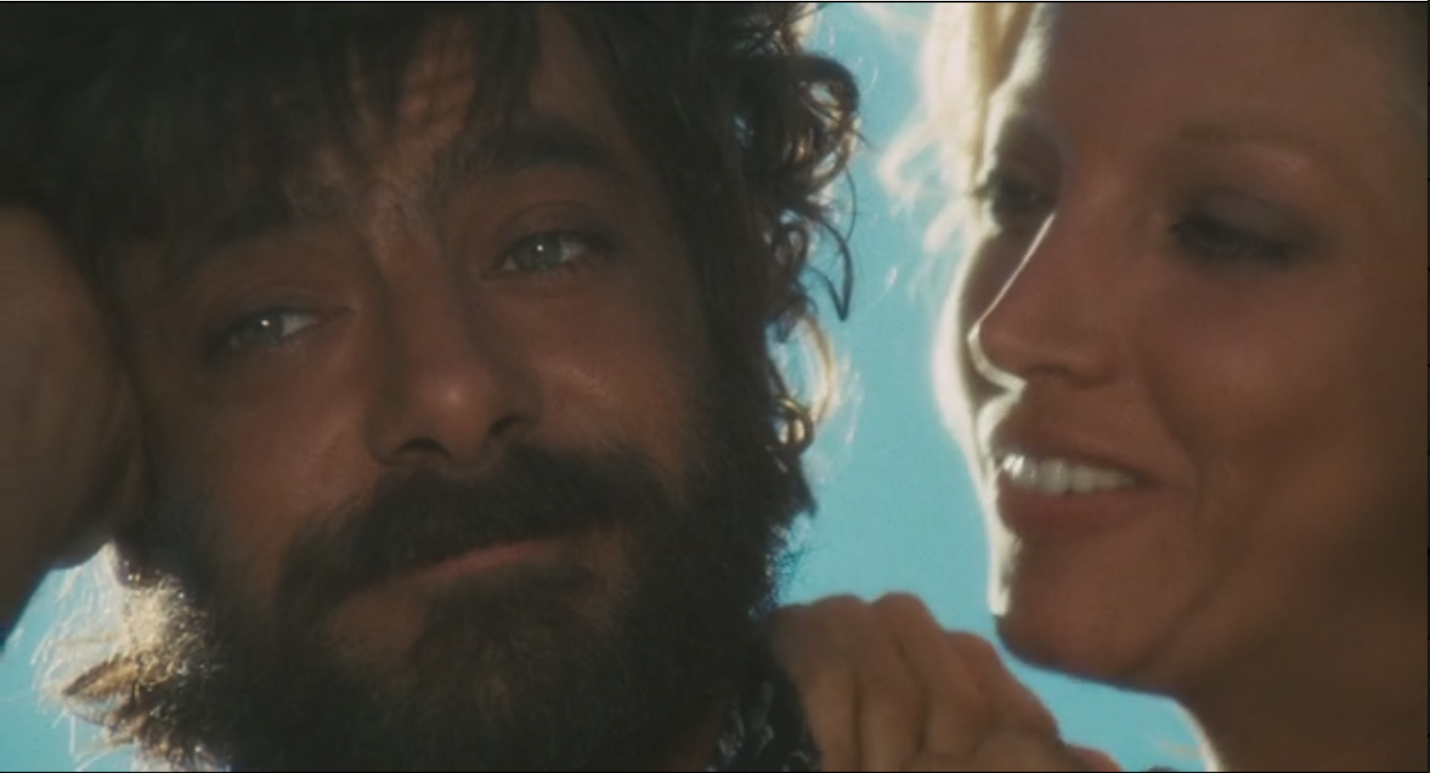
Lina Wertmuller’s Swept Away focuses on a communist, working-class man, Gennarino, who is constantly belittled by a bourgeoise woman named Raffaella. Swept Away was pretty comical in the beginning, but it quickly transformed into a film so disturbing that it was nearly impossible to watch, and yet I could not peel my eyes away from the screen for even a minute. When the two opposing characters shipwreck on a deserted island, we are shown how sick and twisted Gennarino has become due to his oppression in a “power to prevent” civilization. A “power to prevent” society is the more traditionally taught idea in which competition between individuals must be present, and individuals must repress themselves and others in exchange for a healthy society; however, it has quite the opposite effect. Typically, for a “power to prevent” civilization to function, both the oppressed and the oppressors must be present. A “power to prevent” lifestyle is based on the thesis that in order to succeed in society, one must “step on the backs of others” to “climb the socio-economic ladder” and rise in status. The theory embeds into the minds of the people a proposition that, in order for one party to gain, another party must suffer. For instance, throughout most of American history, America has based its civilization on an oppressive “power to prevent” system of capitalism; specifically, in relation to African Americans. Throughout all of American history, African Americans have been systematically oppressed and “put down” by the white upper and middle classes; slavery, sharecropping, poll taxes, literacy tests, black codes, convict leasing, Jim Crow laws, and more have all been in effect with the sole intention of keeping one class of people down in order for another to prevail. The conservative “power to prevent” capitalism which America has run on for much of its history would eventually lead to the Great Depression due to the formation of monopolies and an insufficient flow of currency as a result of an oppressor-oppressed based society.


In the context of the film, most people would be distressed on an uninhabited island; however, Gennarino sees the shipwreck as a blessing and uses it as an opportunity to “get ahead” because in his new habitat the normal unwritten constraints of society are turned upside-down. For once, Gennarino is at the top of the social ladder. While from an outside perspective it is clear that Gennarino and Raffaella’s chances of survival would increase greatly if they joined together as equals, Gennarino has been worn down by civilization so much that he is unable to rid his mind of the damaging oppression which he has dealt with his entire life; instead of joining together, Gennarino would rather inflict oppression on another person even after knowing how damaging it is. The effects of civilization on Gennarino are first shown in the scene when Raffaella says there must be some law against letting others go hungry and Gennarino responds: “If there was such a law they could put all of the wealthy people in the world in jail, but, since there isn’t, all you see in jail is the poor” (Wertmuller 49:20). While less evident, Raffaella’s mind has also been contaminated by the effects of societal competition. Rather than treating Gennarino like her equal when they shipwreck, Raffaella still ignorantly hangs on to her “power to prevent” ideology and treats him as a servant where the unwritten rules of society do not pertain.


Not long after showing how corrupted the two characters’ minds have become as a result of their flawed civilization, Swept Away features a sickening rape scene in which Gennarino first violently abuses her and then makes Raffaella beg for him to have sex with her. When viewing this scene for the first time, it was unbelievable. I even thought to myself, “This is ridiculously unrealistic. No one would ever act this way to another human being over as a result of their social status,” but if that were true, then school shootings and rape would not be a real worldly issue. Lina Wertmuller, a progressive feminist, was attacked for including these types of scenes and titled a traitor to the cause; however, she was simply misunderstood. These scenes were not included to belittle the value of women, but to show how deeply our humanity can be deranged from living in these “power to prevent” civilizations which do not only demand us to “act in a savage way to another version of ourselves,” but require us to create status (Gordon). In the rape scene, we are truly shown how deeply scarred Gennarino’s mind and soul are. After every punch, he exclaims: “That’s for causing inflation and raising taxes and hoarding your money in Swiss banks instead… and this is for the hospitals where the poor people can’t get in… and that’s for raising the price of milk and cheese” (Wertmuller 1:08:30). No human being would ever naturally beat and rape another person, but after being constantly belittled and dehumanized in a “power to prevent” civilization, Gennarino does so to establish dominance and put his own ill mind at ease.


Whereas Swept Away focuses on the many ways that civilization causes humanity to fall ill, Wim Wenders’ Wings of Desire focuses on how humanity can be cured. Wings of Desire is the story of two angels, Damiel and Cassiel, who watch over civilization and eternally attempt to ease a diseased humanity. The film spends a considerable amount of time presenting scenes in which the two angels aid distraught people laced in the pain of enduring their broken souls. For instance, in the very beginning of the film, there is a scene which takes place on a train full of working-class people who struggle to earn enough money to survive. Wim Wenders allows the audience to hear what is going through the minds of the train’s passengers who are overcome by the problems created from their own artificial habitats. The scene highlights this by showing one woman worrying: “How will I pay? With my small pension?” (Wenders, 23: 30). Damiel finally settles on trying to console a man who has lost everything in his life including his family, friends, and his faith. The man thinks to himself: “You’re lost. It can go on for a long time. Abandoned by parents. Betrayed by wife. Friend in another town. Your children only recall your stutter. You could hit yourself as you look in the mirror” (Wenders, 23:35). This man has become so hopeless that he is willing to inflict physical pain on himself, a common action in modern civilization. When Damiel sits next to the man and puts his arm around him, the man feels the hope he had lost and thinks: “I’m still there. If I want it. If I only want it. I can drag myself out again” (Wenders, 23:40). This scene symbolizes how everyone in society goes through the same type of pain, and if people would just care for one another, then suffering could be relieved, or at the very least be greatly minimized. It does not take an angel to treat another with kindness. In “power to prevent” civilizations people are told to mind their own business and care for no one but themselves, and if someone does try and reach out to another person, they are shamed. If this idea does not seem realistic enough, try giving a smile to a stranger passing by in your own life; many will look at you like you are insane.


Wim Wenders makes sure to exaggerate how much “power to prevent” societies have desensitized people in the scene where a man has been in a motorcycle accident and is dying on the street. Even though a crowd of people is surrounding him, no one even tries to help him. Although it is likely that none of the bystanders could actually save the man, they could have at least tried to comfort him so he did not die alone. Instead, they simply stared at the man like he was a freak and watched the life fade from his eyes. It is only until an angel comforts the man in his time of dying that someone else steps in to help. Wenders makes a point to show that this is how sick humanity has become. Even nowadays, while it is a much less intense scenario, if someone at a grocery store very obviously could not reach something from the top shelf, almost everyone would feel inclined to help them, but very few people would actually do something. Meanwhile, most people would just brush it off with a quick “not my problem.”


Perhaps the most important scene in the film is when a man so broken by society decides to commit suicide. This scene is absolutely pivotal because for the first time even an angel cannot save an already-broken man. Every person in the film up to this point could feel the divine presence of Damiel and Cassiel; however, this man’s mind and soul were so deeply ruined that he could not even feel “hope’s” head resting on his shoulder. When it is shown what the man is thinking before he takes his own life, the audience can see how ill his mind is because he is only able to ramble about nonsense: “It’s cold. My hands were always warm. A good sign. It crackles underfoot. What time is it? The sun’s setting. Logical. The west. Now I know where the west is” (Wenders 1:08:17).  Wenders purposely waited a full hour to put this scene in the film to show a reality of civilized existence. Although the audience would think that the man would be saved because of one angel, they are proven wrong. This is to show how often times people will see someone in distress, whether it be in their own lives or on the internet and wait for some other “angel” to come along and help solve the problem, rather than just stepping up and doing it themselves. Perhaps if this man was cared about by others or simply asked how he was doing prior to this event he could have been saved. It is from this scene that the message of the entire film is clear, and more importantly, Wim Wenders gives humanity the key to cure itself.


To cure humanity, it will take more than two angels. Every single person must make an effort to be an “angel,” which does not mean that people must sprout wings and be touched by the hand of God, but instead they must simply give little efforts to make life better for one another. To save a broken humanity, civilization must abandon its “power to prevent” lifestyle in exchange for a “power to join” lifestyle based on love and feeling: for one another, life, and for humanity in its entirety. An example of a “power to join” lifestyle is exhibited through the first time Damiel and Marion meet as human beings. Not once does either of them mention the fact that Damiel is an angel and Marion is a mere human being. Instead, they accept each for who they are and are able to look past their major differences through the power of love. The first step to curing an ill humanity is to recognize that it is not okay to ignore the fact that our current “power to prevent” lifestyle is destroying the minds and souls of human beings, and change will not happen by itself. It is up to everybody to give a little bit of effort in their everyday lives to make a big change.


Works Cited

Jon Bellion. “New York Soul (Part ii).” The Human Condition, 2014.

Pink Floyd. “Comfortably Numb.” The Wall, Apr. 1979.

Pink Floyd. “Another Brick in the Wall, Pt. 2.” The Wall, Apr. 1979.

Wenders, Wim, director. Wings of Desire. 1987.

Wertmuller, Lena, director. Swept Away (1974). English Dubbed. YouTube, YouTube, 19 Feb. 2017, www.youtube.com/watch?v=OzAEF5g35uw.


Monday, October 22, 2018

Interpreting "Swept Away": Where Is the Grey by Jennie Golub


The black and white clothing in the film Swept Away is as much a character as Gennarino and Rafaella. To start, the black and white clothes are allegorical for the film is clear-cut: there is no in-between. One either is communist or capitalist, poor or rich, man or woman. The absence of the color grey in the film is substituted by a surplus of the colors black and white. Peculiarly, under this façade, Gennarino and Rafaella’s love-hate relationship is ambiguous like the color grey, as is the complexity of the characters themselves. Even the island in itself serves as a grey playground of role exploration for the characters. Despite the challenge of analyzing color symbolism due to their interpretative and ambiguous nature in Swept Away, it appears that the colors black, white, gold, and the absence of grey are all meant to provide insight into Gennarino and Rafaella’s strange duet in addition to the individual character’s respective journeys.


Just as black and white are stark contrasts to each other, so too are Gennarino and Rafaella. Poor male communist Gennarino stands at the bottom of the socio-economic hierarchy, a blunt comparison to wealthy capitalist female Rafaella—or in the words of Gennarino, “Me, poor black trash, and you, rich white bitch.... You, the great lady, and me, a mere minion….  Everyone in his own place” (Wertmüller, 1:32:44). It is no coincidence that during this scene, both Gennarino and Rafaella are wearing black shirts with white pants. 


Generally, in western culture, the color black embodies negative qualities. Marketer and designer Jacob Olesen writes, “Black is the color of the hidden, the mysterious and the unknown. It creates a sense of mystery and keeps things to itself, hidden from the rest of the world” (par. 2). First, it is clear that their relationship suffers from severe trust issues. Gennarino is a ticking time-bomb who can abuse Rafaella either physically or verbally at a moment’s notice. In fact, toward the end of the scene mentioned earlier where Gennarino compares and contrasts himself with Rafaella, he tests her loyalty, as he often does, by declaring, “You and me are an item only because we’re here, and that’s it” (Wertmüller, 1:33:10). Gennarino announces this self-fulling prophecy to Rafaella in which she would never be caught dead in public with a filthy Southerner like himself. How did Gennarino come to such a resolute conclusion regarding their relationship? Where is his evidence? Quickly Rafaella reassures, “I might love you even more,” and as usual, Gennarino uses her declaration of love against her instead of letting it guide the relationship to a healthier state by barking, “Even more? So, you were lying when you said you loved me completely” (Wertmüller, 1:33:25). Suffering from a heavy dose of insecurity, Gennarino’s negativity goes beyond fictitious statements: he dismisses Rafaella as well. For instance, Gennarino disparages her by declaring, “If you lie... I’ll kill you” (Wertmüller, 1:33:34).  Of course, Rafaella is deeply unsettled by this threat although she does a great job masking this fear as she can never tell whether he actually means what he says. She quips back to him, “You’ll kill me?” and Gennarino confirms that he is indeed capable of turning the abuse up to a lethal point (Wertmüller, 1:33:38). This proclamation of negativity is a way for Gennarino to put down Rafaella as well as illegitimatize their “love.” In addition, shortly after they have sex, Gennarino is seen sewing a black garment that appears to be Rafaella’s (Wertmüller, 1:31:52). Although the briefness of the scene may not leave much of an impression on viewers, the moment is allegorical for Gennarino sewingor rather rebuildinghis power-to-prevent mentality. Sex is a step couples often use to become more intimate with one another; Gennarino and Rafaella’s sex leaves him with the option to join her, but sadly Gennarino chooses to reject her. It is as if the barriers of their former selves had been knocked down, allowing them the choice to embrace each other, but instead Gennarino rebuilds his barriers out of fear of the unknown. It is no wonder they are both wearing black shirts: both of their intentions are mysterious to one another. Neither of them can decipher whether they are in love or if it is just a means of survival for Rafaella and power play for Gennarino. This double meaning of intentions is further exemplified by the white pants.


Olesen reports, “In color psychology, white is the color of new beginnings—wiping the slate clean” (par. 3). Both of the characters accept their new life to an extent. Rafaella understands that, until someone rescues her and Gennarino from the island, she has to lay low and adhere to Gennarino’s brutish mentality and rules as a means of survival. Gennarino, on the other hand, accepts his newfound power that he is delighted to abuse. The new beginnings presented by the white pants are cancelled out by the mystery and secrecy of the black shirt.


Notice that not once in the movie is an article of grey clothing seen. Olesen writes, “From a color psychology perspective, the color [grey] is a compromise—it is either black or white. It is the transition between the two colors” (par. 1). Gennarino, nor Rafaella, are ever seen wearing grey because they never achieve a conventional positive or negative relationship, or as Olesen says a “compromise.” Instead the colors black and white clash into each other. If the characters ever loved each other, it was never fully. If they loved each other, then Wertmüller might indicate a newfound equality and acceptance in the relationship through the color grey. Beyond the new role reversal, the white pants could have been allegorical for a newfound love, but the secrecy of the color black rejects compromise. Being that Gennarino bears this power-to-prevent mentality, the color grey never materializes because he denies equality despite claiming to be a communist. 


The scene just discussed is followed by Gennarino asking Rafaella for her gold earring to which she obliges (Wertmüller, 1:33:56). Although the color gold has numerous redemptive values such as “success, achievement and triumph in color psychology,” (Olesen, par. 5) it can also carry negative connotations such as “disparity between rich and poor, untrustworthiness, self-righteousness or egotism” (Olesen, par. 5). Under normal circumstances, the gold earring would be symbolic of newfound equality and acceptance, but their relationship never achieves a grey equality. If the gold earring is representative of the disparity between rich and poor, then Gennarino is no longer a “communist”—if he ever really was—and is attempting to strengthen his power over her the same way she used to dominate him. Notice that Gennarino asks Rafaella for the earring; it is not as though she simply volunteers it. Somehow the gold earring makes him feel superior, as though he is demanding power from Rafaella; it is the cherry on top to appease his fragile ego. Gennarino is thirsty for power, and the gold earring serves as a material award of sorts to boost his ego. While achievement is a positive characteristic of the color gold, his egotism cancels out the redemptive values of gold just as black cancels out any positivity brought about from white. Gennarino’s acceptance of the gold earring is explicitly him retrieving wealth. In other words, the earring is as close as Gennarino will ever get to wealth or even equality. The gold earring eases Gennarino’s painful reality that outside of the island he will never achieve anywhere near the same caliber of wealth and power as Rafaella. The colors are reflective of more than just Gennarino and Rafaella’s unusual relationship, but more specifically they provide a glimpse into the individual character’s respective journeys. 


The island shakes Gennarino and Rafaella out of their rigid roles that were previously enforced by civilization and forces them to do some soul-searching. The gold earring moment abruptly transitions to Gennarino and Rafaella in pure black clothing embracing each other (Wertmüller, 1:34:23). The scene depicts a feeling of loss further emphasized through the addition of a sad whistling tune and the camera pan over the desolate sandy dunes. Olesen states, “Teens often have a psychological need to wear black clothes at the stage of their life, where they go from childhood innocence to the sophisticated adulthood. It means the end of a part of their life and the beginning of something new. It allows them to hide from the world, while they discover their own unique identity” (par. 7). While Gennarino and Rafaella are well past the age of adolescence, they are both embarking on individual soul-searching journeys as a teenager would. The characters are at a liminal stage in their development, and the island acts as an agent of change in their lives. Essentially, the reason Gennarino and Rafaella are on this soul-searching journey is because of the island. Without the island they would remain in their black and white roles. In particular, Gennarino seems to be the most visibly conflicted by his new identity. On the one hand, Gennarino wants wealth and power as seen in the gold earring scene. On the other hand, he is a devout communist as mentioned repeatedly throughout the film. The dreary desert is metaphorical for Gennarino’s confused and conflicted state of mind; the gloomy whistling and isolated desert are purposeful accents to his feelings of loneliness brought about by his inability to trust Rafaella. At the same time, he wishes their “love” was genuine and not just an aftereffect of their being stranded on the island.   


Undeniably, when Gennarino is tightly holding Rafaella as she peacefully sleeps in his arms, the way he gazes at her is loving, yet mournful and regretful (Wertmüller, 1:34:50). Gennarino’s ego denies him the ability to reveal his true feelings for Rafaella; his affection is only shown when she cannot witness it. Gennarino is unsure of how to love her. As his problematic feelings for her arise, he acquires a cruel self-defense mechanism in which he belittles her instead of embraces her. On a more dramatic note, he may be incapable of loving another at all. He has a wife who selflessly adores him, yet he degrades her for “ruining his image” the moment they are reunited (Wertmüller, 1:40:36). The absence of white clothing in the scene is to signify that the opportunity to publicly and unashamedly love Rafaella has closed. The sadness that is conveyed in the scene is to accentuate Gennarino’s reluctant acceptance of this unfortunate reality where his ego denies him the power-to-join her. Seeing Gennarino’s struggle to love reveals that the problem is not actually caused by his lover; it is a dilemma with his ego.


Gennarino never wears grey because his own state of mind is at war with itself and fails to reach a cognitive compromise. Gennarino grievously gazing at Rafaella (Wertmüller, 1:34:50) uncovers that he is not only incapable of love, but he also is conflicted over whether or not he loves or hates her. First, Rafaella represents everything he claims to despise: capitalism, independence, wealth, and power. Confessing his love to Rafaella would be the equivalent of saying that he loves everything she stands for. Gennarino confirms that he sees Rafaella as a walking emblem of greed and power when he suffers from a fit of rage, beats her mercilessly, and declares, “Don’t you understand you have to pay for everything?” (Wertmüller, 1:08:41) leading him to air a list of grievances regarding the injustices inflicted on the poorer class caused by wealthy people. Rafaella, running for her life, cries, “Am I responsible for all the ills of the world?” followed by a resolute “Yes” from Gennarino (Wertmüller, 1:09:28). Taking into account Gennarino’s public stance as a poor but loyal communist, it is no wonder why he is unable to wholeheartedly love Rafaella. Essentially, if Gennarino were the communist he proudly claims to be, he would not have created this obsolete man-is-greater-than-woman hierarchy. Gennarino relishes having power, but he hates being powerless. Knowing that he will never have power outside of the island, conquering Rafaella—who is exceptionally objectified by him—is as close to power as he can get. By making her less-than, he feels bigger. Through the power of the color white (new beginnings), Gennarino could reach a cognitive compromise, but he allows the color black to consume him, leading to his inability to make a decision as alluded to by the absence of grey.


Finally, Gennarino confesses his love to Rafaella, but it is too late (Wertmüller, 1:44:09). Gennarino is practically begging for Rafaella to return to the island with him and pretend that they never left, but as indicated by her black and white shirt, time is up. Wertmüller places Rafaella in a shirt that yet again never achieves grey but instead is composed of small sharp lines of white and black. Though hard to tell, the shirt appears to consist of more black than white. The role reversal brought about by the island is steadily reverting back to its original state, as is Rafaella. The trauma Rafaella endured on the island will most definitely be an emotional scar she will carry for the rest of her life. That being said, the fading of white in Rafaella’s shirt reveals that the healing process for her has already begun and that she is receding into her old ways of life: luxury, independence, and power. Furthermore, the urgency in Gennarino’s request (or rather his desperate plea) to escape back to the island that gives him the upper hand is ensued by the notion that he knows all too well that she is re-adopting her former role quicker than imagined. The omnipresent power dynamic that looms over Gennarino and Rafaella’s love-hate relationship ultimately retreats back to its original homeostatic state.


The lack of grey emphasizes the metaphorical grey. The overabundance of the black and white clothing is unnatural, just as the uncertainty of their relationship is abnormal. The characters individually and as a couple never come to a grey compromise. For instance, at the end of the film Rafaella chooses to wear black because she does not want to change. As explored in the last paragraph, for what reason would Rafaella go back to the island with her abuser? There is nothing rejuvenating or positive about going back to the island with Gennarino as the color white would suggest, and so she chooses black regression. Conversely, Gennarino never even chooses a color and instead continues to wear black and white clothing for the duration of the film (Wertmüller, 1:48:31). He thinks that he loves her, but at the same time he is still unsure. He impulsively wants to return to the island because, although he struggles to admit it, he hates being powerless, poor, and Southern. However, he has already established a life as a poor Sicilian communist. In the end, Gennarino’s inability to make a genuine and definite decision costs him both Rafaella and his Sicilian wife. The characters overemphasize wearing black and white because they wish they could be as single-sided and clear-cut as black and white. Gennarino and Rafaella avoid the greyness that they each possess like the plague because the color grey is incredibly messy and unclear. Does grey consist of more black or white? What are the specific values grey possess? Overall, grey does not have “X” amount of black or “Y” amount of white, and the same goes for Gennarino and Rafaella because people, as well as their relationships, are messy.


The colors black, white, gold, and the absence of grey all work in conjunction to add depth to the film. The plethora of black and white is to illustrate the severe reluctance the characters have toward change. The characters could have had a shot at a loving relationship if they embraced the new slate of white, but they do not. Instead Gennarino and Rafaella’s relationship is always in a state of conflict just as the colors black and white are. If the characters came to terms with their roles, they could have achieved some value of the equality that grey enjoys. While the man versus woman power play is prevalent through the film, the color gold is to represent the other power dynamic in the film: poor versus rich. Furthermore, the glistening state of gold reveals Gennarino’s muddy unstable ego. The absence of grey is to highlight the reality neither character wants to face: the ambiguity of human nature such as their needs, desires, and feelings. After becoming accustomed to the narrow roles Gennarino and Rafaella have come to accept and define as “normal,” the characters struggle to accept new beginnings (the color white). The characters long for a simple black and white solution in which everything and everyone has a place and a specific role, but that is not the case. Gennarino and Rafaella overcompensate for this natural, yet unwanted, chaos through solid black and white garments. The actuality is that, similar to the color grey, no person is a single color just as no relationship is either; instead there are multiple colors and compromises that make up each person and relationship that are vague and undefinable. The color grey does not have a set amount of white or black and few things do for that matter. So, when you think of the color grey what shade is it? Is it a light or dark grey? I bet the shade of grey you are thinking of is different than the one I imagined.


Works Cited


Gordon, Paul Kirpal (KP). 12 March. 2018. Class discussion.

Olesen, Jacob. "Black Color Meaning – The Color Black." Color-Meanings.com. N.p., n.d. Web. 23 Mar. 2018.

Olesen, Jacob. "Black Color Meaning – The Color White." Color-Meanings.com. N.p., n.d. Web. 23 Mar. 2018.

Olesen, Jacob. "Black Color Meaning – The Color Gray." Color-Meanings.com. N.p., n.d. Web. 23 Mar. 2018.

Olesen, Jacob. "Black Color Meaning – The Color Gold." Color-Meanings.com. N.p., n.d. Web. 23 Mar. 2018.

Swept Away. Dir. Lina Wertmüller. Perf. Giancarlo Giannini, Mariangela Melato. Medusa Distribuzione. 1974. Web.

Wednesday, March 14, 2018

“The Ironic Hospitality of the Kalahari Desert” by Morgan Morrill


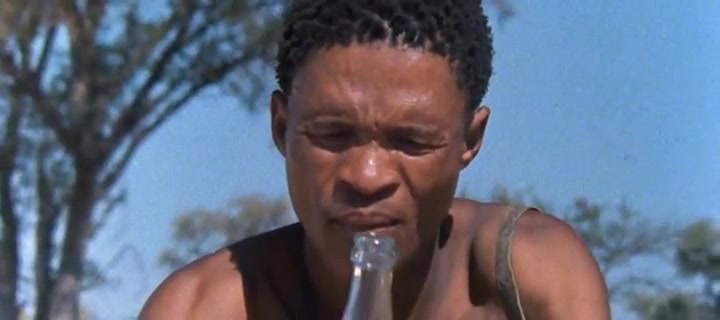
Today, members of the modern world rush past in a whirl of color and noise, too concerned with busy schedules rather than with their quality of life. People live their lives in a strict fashion with every minute of every day planned out. There is barely time to breath in this machine-like world with the amount of meetings and activities that everyone has written on to their calendars. This is an extreme way to live, but people brush it off believing that it is the only way.  After all, it is the new and improved method of advancing civilization. This image deeply contrasts with the lifestyle of the Kalahari Bushmen that Jamie Uys presents in his 1980 film, The Gods Must Be Crazy. Deep in the parched Kalahari Desert, these tribes live a simple life devoid of all modern improvements, yet they seem perfectly content. Is there more to life than endless to-do lists? Uys uses the Bushmen in his film to show the benefits of a laid-back lifestyle as opposed to the high-strung chaos of modern life.


When the movie beings, Uys sets up his comparison promptly. Sweet playful notes fill the background as images of African animals flash across the screen. The first people that are shown are the “pretty, dainty, small and graceful” (Uys, 1:33) Bushmen. They are all dark and slender, each with a wide smile on their face. Young and old members of the small tribe are seen helping one another, as well as laughing and playing. Though only 600 miles from a city, the Bushmen live in a completely different world where there is not evil nor vices to poison their lives. As the voiceover remarks, “They must be the most contented people in the world” (Uys, 2:54). The narrator treats this scene, and all other ones, as though the movie is a nature documentary. Most of the insights that the voice makes are over the top and used as a comedic tool. For example, the narrator makes it seem like the Bushmen have no problems in their lives, but that is a strong unlikelihood. The comments do, however, emphasize the fact that these people live a peaceful life and makes it glaringly obvious to the audience.


Just as the voiceover points out the tranquility of the Bushmen, it also illustrates the chaos of modern life. The opening cuts quickly from the joyful tribe of people to the hustle of a loud city with cars speeding along its roads like blood through veins. This is how Uys depicts what the narrator deems “civilized man” (Uys, multiple occasions): fast-paced, raucous, and utterly insane. The last descriptor becomes more apparent as the voice begins to describe the lifestyle of city people. He states that “civilized man refused to adapt himself to his environment, and instead he built his environment to suit him” (Uys, 6:12). Towers, cars, assembly lines, and other inventions whiz past to further prove his point. Not a single piece of nature is seen unless it has been mowed, trimmed, and pruned to perfection. The whole scene moves with a machine-like precision, stopping and starting at just the right times. Everything is by design. Once again these characteristics are emphasized on purpose just like with the Bushmen. The severity of order in the city is being used to make it obvious to the audience and easy to contrast with the ironic hospitality of the Kalahari Desert.


The biggest difference between the Bushmen’s world and that of civilized man were not the blatant alterations, but rather the overall feel of each place. As mentioned previously, the Bushmen all had large grins across their mouths; it is as if they were born with them in place. They have to work hard to survive in the desert, but their faces never falter and they still have time for fun. The Bushmen simply radiate happiness and viewers can sense the warmth these people give off. There is no such feeling with the modern world. Smiles are few and far between in their modern scene and no laughter is heard above the blaring car horns. Everyone keeps their heads down and a bland monotony settles throughout the streets. Despite having almost everything the Bushmen do not, modern man lacks one thing: happiness.


The happiness famine in the industrialized world is nothing new. Looking at worldwide statistics, one will find that the United States has one of the highest depression rates even though it is one of the most developed countries. About 1 in every 10 Americans suffers from depression and the number of people diagnosed increases by 20% every year (“Depression Statistics”). Why is this the case? What is the cause of the robotic population in Uys‘s film and the declining mental state of America? The movie hints at an explanation when the narrator remarks, “The more [civilized man] improved his surrounding to make his life easier, the more complicated he made it” (Uys, 6:26). Modern day people spend most of their time working in order to keep society running and before that children are shoved into schools to prepare for the work. Stress consumes the population as everyone scrabbles for that house with the picket fence which they never truly get to enjoy because work is always hanging over them. As the voiceover correctly points out, “No wonder some people go off the rails a bit” (Uys, 8:08). It is as though ‘civilized’ man is running inside of a wheel, believing that if they run hard enough they will get the treat just outside of their reach, when in reality they are exhausting themselves just to stay in the same place.


Not only are people working themselves to death, they are also addicted to the stress. Tim Kreider addresses this topic in his article, “The ‘Busy’ Trap.” He explains that people who are constantly busy, which includes most of the population, are that way “because of their own ambition or drive or anxiety, because they’re addicted to busyness and dread what they might have to face in its absence” (Kreider, par. 2). Society has come up with the notion that if a person is not running around 24 hours a day then something is terribly wrong. Standard work weeks are 40 hours, but that time is growing exponentially as the internet allows the population to bring work with them wherever they go, provided they can get a signal. It is not just adults who do this. Parents force full schedules on to their children under the pretense that it will get them ahead in life. In his article, “The Disease of Being Busy,” Omid Safi recalls how when he tried to set up a playdate between his daughter and the neighbor’s child the mother responded with this: “She has a 45-minute opening two and half weeks from now. The rest of the time it’s gymnastics, piano, and voice lessons. She’s just…. so busy” (Safi, par. 5). This toxic environment hell-bent on filling up everyone’s planners down to the last second is what produces the fast paced and apathetic society that Uys shows to his audience.


As opposed to the perpetually swamped lifestyle of modern man, the Kalahari Bushmen hold leisure time in high regard. In their small family groups or villages, these people spend a fair amount of time doing, well, nothing. Free time for all ages is available every day and they fill the time based upon actual desires. Children are also not given tasks until they are much older (“San People,” par. 10). These groups deal with something that civilized man appears to be deathly afraid of: unstructured time. Kreider describes the love of being busy as “a hedge against emptiness” (Kreider, par. 6). Modern society equals fullness with meaning so if schedules are always booked then life must be wonderful. A busy schedule blocks and shoves down unpleasant feelings brought on by difficult to answer questions. Those feelings, however, do not go away, but instead manifest themselves in the rampant outbreak of depression. This is why the Bushmen’s freedom is so important; they have the time to reflect and engage with tough topics. It is not as though they are always having deep philosophical discussions, but they are able to if need be. According to Kreider, “Idleness is not just a vacation, an indulgence or a vice; it is as indispensable to the brain as vitamin D is to the body, and deprived of it we suffer a mental affliction as disfiguring as rickets” (Kreider, par. 10). It is a simple thing, open time, but it makes all the difference and it is what allows the Bushmen to have a well-developed relationship with contentment.


Unstructured time is what will save the mental health of modern man.  It is clear enough that the way society is currently structured is detrimental to people of all ages and making them have a morbid attraction to being busy. Uys’s movie does provide an alternative model in the form of the Kalahari Bushmen. They are obviously much happier, despite living in one of the most unforgiving areas on the planet. The goal in the rehabilitation of civilized man, however, is not to relocate them all to the desert. Instead, specific alterations need to be made so that free time is not seen as a cancer to society, but rather a supplement. Certain laws and regulations have already been put into action and the results cannot be argued against. For example, Finland’s school system allots 75 minutes a day for recess and rarely gives homework. This extra time to grow and develop as a person has allowed Finnish students to graduate from high school at a rate of 93% and surpass all other countries on test scores (“There Is No Homework in Finland”). As for adults, France has only a 35 hour work week and has a law preventing workers from checking their work emails after 6 pm. The country is currently one of the top ten happiest countries in the world (Johnson, par. 2). It is clear by this data that free time is beneficial to the over worked, stressed, and tired population of civilized man.


The time to kick the addiction to busyness it now. Uys was aware of this problem when his movie came out almost 40 years ago. He saw the advantages of joy and leisure in the Kalahari Bushmen, but society has ignored its metal decline. Caught up in meetings, classes, and work, modern man has forgotten about its heart. Along the path to improvement, hearts and souls were left to deteriorate in the background, perpetually left off of anyone’s to-do list. Now, the only way to revive humanity from its emotionally diseased state is to nurture the self again. Time is a gift, not a menace breathing down everyone’s neck till they meet the deadline, and it should be celebrated. That is when people get to know themselves and it is where possibility lies. It is time to put down the paperwork, turn off cell phones, and stop being so busy. Life is a meeting that cannot be missed and there is no way to reschedule it when the time has passed.


Works Cited

“Depression Statistics” Infographic. Healthline. Health On The Net. 2012. Web. 2 April. 2017.

Johnson, John. “France bans work e-mail after 6 p.m.” USA Today. Gannett Satellite         Information Network, LLC. 11 April. 2014. Web. 2 April. 2017.

Kreider, Tim. “The ‘Busy’ Trap.” The New York Times. The New York Times Company., 30 June.    2012. Web. 2 April. 2017

Safi, Omid. “The Disease of Being Busy.” On Being. Disqus., 6 Nov. 2014. Web. 2 April. 2017.

“San People.” Wikipedia. MediaWiki. 23 March. 2017. Web. 2 April 2017

The Gods Must Be Crazy. Dir. Jamie Uys. Perf. N!xau, Marius Weyers, and Sandra Prinsloo. 20th   Century Fox., 13 July. 1984. Film.

“There’s No Homework In Finland.” Infographic. NeoMam Studios. NeoMam Studios. 4 March.   2013. Web. 2 April. 2017.


Tuesday, June 6, 2017

Stifling Society: Learning from the Uncivilized in WALKABOUT by Imani Hinson


Nature and the way things work outside of civilization is what promotes growth within individuals. Children exposed to the “real world” are given the opportunity to mature in ways that those who grow within civilization do not. Within western culture, children are accustomed to being cared for by their parents and accustomed to an education that makes them book smart; however, it is the interactions outside of the classroom that will stick with them and help them to learn real life. Being in nature promotes personal growth and helps young people mature into who they inspire to be. The separation from indigenous people and life outside of the suburbs of civilization hinders a child from maturing. We see the process of tearing down these dividing walls within the Nicholas Roeg's 1971 cult film classic Walkabout where civilized children are introduced to an unfamiliar world.

The film begins by defining a walkabout: “When an Aborigine man-child reaches sixteen, he is sent out into the land. For months he must live from it” (Roeg 0:08). The British children live in an Australian  city and are shown within their educational institutions where the girls are practicing vowel sounds and the young boys are also in school rote learning. Both the young lady and the boy are dressed in attire suitable for a formal school when the scene changes to their father driving them out to the Outback where it appears that they will be having a picnic. While the boy is playing with his toy gun and the young girl is setting up lunch, the dad begins to shoot real bullets at the boy. The young girl rushes over to protect both her and the younger brother, but is interrupted by the father lighting the car on fire and killing himself in the process. The young girl and boy now left on their own in the outback, must cope with living sans civilization, without someone holding their hand.


As the two young children walk through the Outback, they are not able to use many resources due to their lack of awareness of the numerous resources at their disposal. They see a black figure in the distance and they meet him, asking him how they can get water. The Aboriginal then uses his basic life skills to ensure that they are able to get water. He helps them get back to civilization, but not before showing them some of the land. This Aboriginal is on his walkabout, having to fend for himself, learning how to mature on his own without having supervision around or having someone baby him through every life decision. The boy just knows what he needs to do to stay alive, and he knows what he needs to do in order to make it through.

The film portrays many differences between civilized life and what is to be considered uncivilized life. It pans back and forth with jump cuts many times, contrasting Aboriginal and European lifestyles and cultural norms dedicated to each set; however, it does not show the difference between the education of the young and the ability to grow during educational years. In western civilization, we are taught arithmetic, reading, writing, social sciences, and natural sciences but learn nothing of the natural habitat or of the indigenous people living in nature. We are systemically taught how to be spoon-fed until around the age of 23 when we are given the chance to be completely independent, to find jobs and learn how to fend for ourselves in a world that is not too kind. “Conservative trends across western schooling contexts are signaling an explicit devaluing of social and moral learning within their official curriculum mandates” (Keddie 355). Western civilization grants students the opportunity to grow in a scholastic sense but not in a moral or social capacity.

In western culture we are educated on a surface level; teachers administer assignments and students are expected to know the information but are never given hands on experience. Paulo Freire discusses the banking concept of learning in western culture where “education is seen as a transaction in which teachers deposit knowledge in their students” (Beckett 50). The problem with this model is that students are never challenged enough to think for themselves or to learn things outside of what is taught within the classroom. Students lack the chance to grow on their own or think for themselves which hinders their development and their growth process. They are halted from learning because they are fed information and expected to regurgitate it when needed instead of having a hands-on experience with the real world.  Freire says that “it’s impossible for me to help someone without teaching him or her something with which they can start to do by themselves” (Beckett). When western culture frees itself of this notion that students are not able to think for themselves, only then will our children will be far more educated and able to grow at a much better rate.

In Aboriginal culture a walkabout is taken by a young person in late adolescence. Given the chance to live on their own for months, teens must learn how to hunt, cook and fend for themselves and yet make it out alive. This may seem harsh, but is that just the western civilized way of thinking? If civilized children were taught beyond the four core subjects, would they be better adapted to the world they will eventually encounter? The Aboriginal was able to take care of himself and two strangers because, from a young age, he was gifted the tools and knowledge of how to be on one’s own. He was not coddled by his parents or village and therefore was forced to grow up and become mature enough to be self-sustained.

Although children of civilized communities are well educated in terms of the core subjects, it is essential to realize all they miss out on by not being introduced to non-civilized life. “The children of civilized races are shut away [from] free contact with nature [and] grow up with undeveloped capacities” (Jones 493).This quote was taken from a study done by Martha Simpson, simulating the Aboriginal walkabout for kindergarten children in civilized Australia. These children were given an opportunity to expand their education outside of the walls of their classroom and learn what those who are living this life every day experience. By creating a simulated walkabout, the children are given an opportunity to have that growth period on their own like the Aboriginals who live there already have. The tools for success to living life can be given through the nature of being able to know what’s in one’s backyard. “Advocates believed that direct contact with nature fostered the instincts required for adjustment to the modern world” (Jones 493). Taking some practices from the Aboriginal people, western civilization would be able to mature if we were not afraid to take a peak in their back yards.


In addition, by showing children the idea of accepting diversity, they are able to grow up knowledgeable about the many different cultures in the world. In western civilization many young children do not know of diversity or are not willing to accept it until they are older. The maturity process that comes with being outdoors and experiencing other cultures helps to ensure that these children are equipped with the tools for success when viewing others. As KP said, these children are not able to get to the point where they “look at others and don’t see others as others” (Gordon). They are not at stage five and six of Lawrence Kohlberg’s theory of moral development. “In brief, for Kohlberg later stages were not just different than earlier stages; later stages were in fact higher, more adequate, preferable, more moral or morally better than earlier stages” (Moroney 362). “Most people never reach the highest stages (five and six)” (Moroney 362). These children must be given the tools and access to seeing diversity first hand.

In Simpson’s experiment “Aboriginal legends and cultural practices thus become teaching tools for white settler children, enabling them to learn from the bush” (Jones 494). These children were given the tools to accept diversity and appreciate other cultures because they were exposed to differences and different people at a young age. By teaching children in their early ages of learning to accept all cultures and people they are given a step ahead of others to reaching their full moral capacity.

Walkabout asks the question as to if our society’s education is really equipping us with the tools we need to succeed. Being a college student, growing up in the ideal public school education, there is so much more that is unseen and unknown of due to the fact that the education system has not gifted the facts about life outside of civilization. They teach the four core subjects and expect young adults to be able to know how to live their life. For western civilized children our walkabout does not start until 22 or 23 when we are set out on our own after college to find jobs, to find housing, to find ourselves, but that walkabout process of exploring and learning could be our guide along the way as we go through schooling. If children in western civilization were not so coddled by our society’s education system then our children would go far beyond what they ever thought of accomplishing.


Works Cited

Beckett, Kelvin Stewart. "Paulo Freire and the Concept of Education." Educational Philosophy & Theory, vol. 45, no. 1, Jan. 2013, pp. 49-62. Web. 28. Feb.2017.


Gordon, Paul Kirpal. 22 Feb. 2017. Class discussion.

Jones, Jennifer. "Nature Study, Aborigines and the Australian Kindergarten: Lessons from Martha Simpson’s Australian Programme Based on the Life and Customs of the Australian Black." History of Education, vol. 43, no. 4, July 2014, pp. 487-503. Web. 20. 2017.

Keddie, Amanda. "Prioritizing Social and Moral Learning Amid Conservative Curriculum Trends: Spaces of Possibility." Journal of Curriculum Studies, vol. 47, no. 3, June 2015, pp. 355-373. Web. 22. 2017.

Moroney, Stephen K. "Higher Stages? Some Cautions for Christian Integration with Kohlberg's Theory." Journal of Psychology & Theology, vol. 34, no. 4, Winter2006, pp. 361-371. Web. 22. 2017

Walkabout. Dir. Nicholas Roeg. Perf. Jenny Agutter, Jean-Luc Roeg, and David Gumpilil. 1971. Youtube.


Sunday, March 5, 2017

Interpreting WALKABOUT and SWEPT AWAY: Saeviri Humanum Est by Isaac Hoffman


Reviewers and interpreters of the films Walkabout, by Nicolas Roeg, and Swept Away, by Lina Wertmüller, tend to paint the over-arching messages of the films as acutely monochromatic, when often there is much evidence that through the motifs of juxtaposition in the two pictures, the directors not only contrast “civilization” with “savagery” and capitalism with communism, but also compare the adverse concepts in such a manner that the viewer is forced to critically contemplate the value of each. These interpretations, though perfectly valid, often neglect the inherent reciprocity of “juxtaposition,” that the correlation of different ideas highlights both differences and similarities.


In her analysis of Walkabout, “Eyes Wide Shut,” Alexa Grabowski skillfully elaborates one such comparison in the beginning shots of the film:

People’s faces were not shown for the majority of the opening scene; they were cut off at waist level. The children even appeared to be panting like dogs while in class leading me to believe that Roeg wanted us to see them as a herd of animals rather than individuals. At that point I understood that there was going to be a hint of societal mockery throughout the film. (2)


This is an engaging interpretation, and later in her essay, Ms. Grabowski explains that to interpret this “societal mockery” as purely subversive detracts from the film’s message as a whole (4). Rather than focusing only on the contrasts between civilization and savagery, the film considers the parallels between modernity and its ancestors in tribal systems and unfortunately suggests no solution to the problems which Roeg presents.


In a similar manner, Xavier Eang Lee in his analysis, “The Colored Man’s Burden,” interprets a poignant scene in the film which juxtaposes the Aborigine boy’s gutting of a kangaroo with cuts to a professional butcher in his shop:

The switching between visuals shows the connection between the two ways of butchering. Ab’s way is messy and out in the open, while the Western butcher is chopping in a clean, white environment.  Although these two methods are different they are still essentially the same thing.  Roeg uses the constant changing between frames to show that what may seem savage or taboo from one point of view may not be so from another. (4)


This scene does not demonize Western society, but uses the assaulted sensibilities of the viewer, offended by the brutality of the butchery, to remind him/her that the most significant difference between the two worlds, civilized and savage, is that Western society demonizes the personality of the uncivilized; the concept of civility pretends that the connection between actor and action has been severed, that interaction which remains impersonal is of higher status. Notice that, much like the children in Ms. Grabowski’s scene, the face of the butcher is not in the field of view, his identity is separate from his deeds.


This insulation of doer from done is most clearly present in the young boy, who runs about playing war in the beginning of the movie, yet does not understand the implications of his own father taking shots at him. Society has severed the connection between the deed and the morality and brutality of its author, no one is personally invested in their action and this allows them to do as they please without intervention on the part of the conscience. It is this intentional severance which Roeg is highlighting in this film and he gives no real suggestions for solving the problem.


Unlike the previous analyses, the following interpretations attempt to place the film Swept Away in neat little boxes of “misogynistic” or “pseudo-feminist,” with little consideration of how the themes are used in the movie, particularly whether or not the sexism in the film—Gennarino states outright, “Women were meant to serve men” (Wertmüller 59 min.)—is presented in a negative or positive light. Though it is certainly arguable whether or not rape in film (and, in this case, it most certainly is rape) can even be comedic at all, Wertmüller’s film can be interpreted satirically, and the question simply becomes whether or not the mockery was successful and clear (the very fact that it must be debated is evidence that the parody has failed). How this satirical interpretation affects the intent of the film remains mostly unexplored.

Roger Ebert, in his review of the film, argues that the film sends two specific messages:

(1) That once the corrupt facade of capitalism is stripped away, it's the worker, with the sweat of his back, who deserves to reap the benefit of his own labor, and (2) that woman is an essentially masochistic and submissive creature who likes nothing better than being swept off her feet by a strong and lustful male. (par. 5)


While this is one possible interpretation, it assumes that Gennarino is meant to be viewed as the film’s protagonist, that he is in the “right” at all times. It seems a more nuanced approach is necessary. Perhaps Wertmüller intends to highlight the similarities between the two systems, capitalist and communist, as she points out that even when the communist is in power, he abuses his power as much as Raffaella does when she has the greatest influence. This is certainly not to say that her verbal abuse is somehow equal in magnitude to rape, as this is not the case, but if the director is satirizing Gennarino’s actions, then it is incredibly ironic that the communist, who ostensibly fights for a classless society, sets up a diminutive sexist hierarchy as soon as the reigns are his to snap.


James Berardinelli, in his opposing view of Swept Away, argues that those who criticize the film’s sexism are neglecting two pieces of evidence:

First, Raffaella actually starts the abuse with her constant berating of and lording over Gennarino on the yacht. Secondly, this "romance" is not taking place in anything resembling a civilized situation - by virtue of their circumstances, the characters have been thrown back into a setting that mimics prehistoric times, when survival (of the individual and of the species) dictated coupling. Gennarino's physical dominance of Raffaella is, in a strange way, the manner in which he proves to her that he is strong enough to be her mate. (par. 4)


About the most valuable fragments of analysis in this review are the scare-quotes around “romance,” as the film is hardly romantic and not very comedic. The critic’s first point, which has already been touched upon, argues that Raffaella somehow brought the sexual abuse upon herself through her verbal attacks on Gennarino—when he ignores her whining, she shouts, “Your refusal to answer me only shows what a peasant you were!”(Wertmüller 55 min.)—and this argument essentially justifies rape to avenge insult. Berardinelli’s second point romanticizes a primitive state of being and he falls into the trap of demonizing civility and glamorizing “prehistoric times.” The characters’ natural setting is not an excuse to defenestrate morality, but an opportunity to analyze society (which is has both advantages and disadvantages) in an objective manner; injustices can be redressed and a better amalgamated system implemented. To throw completely off the mantle of civilization is to lose its benefits along with its issues, and this principle can also be applied to capitalism, which, though quite imperfect, has some admirable qualities. This is perhaps the message of Wertmüller’s film, that critical analysis and alteration of the status quo is a better path than starting again from tabula rasa. Not to mention that to justify rape by the location in which it was committed, which Berardinelli attempts to do, is morally myopic.


These reviews prove that to focus only on either the comparisons or the contrasts between two concepts limits interpretation, and, ironically, falls into the same trap as the characters in Swept Away, who can only see each other’s differences, physical and political, and not their similarities as fellow human beings. Neither Walkabout nor Swept Away attempt to subvert civilization as it is today, but to force their audiences to think critically on societal issues with an objective morality, without romanticism or hatred of different concepts in their entirety, and by union of the most beneficial aspects of each system to create an objectively better world.


Works Cited


Berardinelli, James. Rev. of Swept Away, dir. Lina Wertmüller. ReelViews. Web.

Eang Lee, Xavier. “The Colored Man’s Burden.” 2016. Print.

Ebert, Roger. “Swept Away by an Unusual Destiny in the Blue Sea of August.” RogerEbert.com.

            20 February 1976. Web.

 Swept Away. Dir. Lina Wertmüller. Perf. Giancarlo Giannini, Mariangela Melato. 1974. Web.

Walkabout. Dir. Nicolas Roeg. Perf. Jenny Agutter, Luc Roeg, and David Gulpilil. 1971. Film.

            YouTube. 10 Jan. 2016. Web. 16 Feb. 2016.