Showing posts sorted by relevance for query kirpal gordon. Sort by date Show all posts

Thursday, March 15, 2012

An Interview with Jeanne Clark

Jeanne E. Clark

KIRPAL GORDON: Although you were born and raised in Lima, Ohio, you had a long apprenticeship in the undergrad & graduate writing program at Arizona State University before you published yr first book, “Ohio Blue Tips.” Among other moving elements in that collection was your eye to the impact of prison on the human spirit as embodied by Joe. For example: 

Reckoning

The Man said, he's dangerous, Miss.
And Joe smiled,
A yellow-toothed smile, chicken fat yellow.
The Man said, if I take these cuffs off him . . .
And I said, take them off.
When Joe put his two uncuffed hands on my shoulders,
He was laughing like something was really funny,
With the Man saying, he ain't like a human being.
And me saying, what's wrong with him,
And wondering what Joe-now dangerous
Because some woman the state paid
$200 a month to raise him
Kept him seven years in a chicken coop-
What was Joe going to do next?
I'm going to put those cuffs back on,
The Man said, before we all live to regret it.

 Would you say this poem is representative of the book?

JEANNE CLARK: Yes, this is certainly a cornerstone or touchstone poem for the poem.  The worlds of outside & inside the prison collide, & the poem asks what everyone is going to do, I hope.   

Ohio Blue Tips (Akron Series in Poetry) 


KIRPAL GORDON: Most prison literature is male in orientation & direction, yet you've won the Akron Poetry Prize with a book that causes us to re-think gender roles.  What’s up with that?

JEANNE CLARK: One of the things that has been missing for me in prison literature, although I didn't set out to write a book of prison poems, is the ways imprisonment implicates others outside the walls of the institution, in this case a woman who grew up in a "prison town" & who teaches in the prison as an adult.  She needs to support her child, & this is the only job she can get.  So, she works in a dangerous, utterly misogynist environment every day.  She's doing her own kind of time.


KIRPAL GORDON: Gorril’s Orchard, your second collection, came out in 2012 after you moved to Chico, CA, to teach in the English Department at the UC branch.  Did the move further west change your outlook?

JEANNE CLARK: Actually, Chico is a Cal State school rather than a UC school.  That said, every move--from Ohio to the Arizona desert to the almond orchards of Northern California--has changed my outlook & the way I approach the work.  OBT was full of story & narrative, a certain midwesterner determination.  GO is meditative & reflective, lyrical I hope, in the manner of the orchards themselves & their cycles.  What connects these books is that they are love poems to these places, these landscapes.

KIRPAL GORDON: Throughout those landscapes and the writing of those love poems, you have also been a most dedicated teacher of writing and literature.  Do you see comparisons over the last thirty years with your students at ASU & Chico & the inmates in Ohio?

JEANNE CLARK: I don't think you can make much comparison between the teaching of inmates and the teaching of college students. The exigencies for each of these student groups is utterly different. What I'm starting to see in college students is all kind of external pressures--financial, social, educational (in terms of their preparation)--that I didn't see 10 years ago, and which are calling for teachers to learn more about their lives, these pressures, and how to meet them in meaningful ways, ways that will help.  We can't make assumptions about who is walking into our classrooms in profound ways.  In this way, my approach to teaching might be moving toward something like it was when I taught in prison, focusing less of official understandings and having to work in a committed way to learning what is going on with a student or group of students and reinventing my work accordingly. 
I tailor individual reading lists for students, as much as possible.  I work to create lots of different kinds of work for students to do in the classes, so they can find ways that engage them.   

KIRPAL GORDON: Some in your profession see a breakdown in teaching critical thinking to young folks who are not deep readers.  What is your experience?

JEANNE CLARK: I don't believe that young people are not deep readers these days.  I think we have to work harder to follow the trails of their own curiosities and build inquiry and practice around that. 

KIRPAL GORDON: Compare your own education at ASU.

JEANNE CLARK: I had a wonderfully supportive group of writers and scholars around me, who supported my work.  I took a long time to finish.  And I sat my butt in a chair for many, many hours. 

KIRPAL GORDON: Poetry outside the academy is everywhere these days with open mics & online journals, poet laureates for every county making those old battle lines & poetry wars of the 70s & 80s seem so far off.  Commentaria?

JEANNE CLARK: I don't think--perhaps I'm wrong--that I'm ambitious with regard to my work.  I have dedicated readers in a writing community that I love, and this is such a gift.  I get to do the work I love with students.  I walk my dogs in the orchards.  Those wars have never been my own.   
   
KIRPAL GORDON: What do you make of the changes in the publishing industry & its impact on poetry?

JEANNE CLARK: I don't know that the changes in publishing make much impact on poetry, as poetry has been on the precarious fringe for a long time.  The changes perhaps press for further changes in practices: reaching out to community audiences, alternative publication venues, the rise of spoken word.  All exciting directions. 

KIRPAL GORDON: What's next?  What's happening with you and dogs?

JEANNE CLARK: I don't know what I'll write next.  I'm in a quiet time. The dogs are anything but quiet.  They're clamoring for what's next, & they intend to play starring roles.   


KIRPAL GORDON: How can GSP readers stay in closer touch with all that you do?  

JEANNE CLARK: I don't blog or have a website.  Readers can stay in touch with the border collie rescue work I do through the website of Border Collie Rescue of Northern California.  The written work shows up on Facebook when something finds its way into print or public performance.  I also teach in the Summer Arts Festival at the University of Fairbanks, Alaska in July.  There's a blog associated with the festival workshop maintained by one of the participants.

Sunday, November 27, 2016

Bending to Beauty: An Interview with Dian Zirilli-Mares


Kirpal Gordon: Congratulations on the publication of your first book of poetry, Bending to Beauty. As your neighbor on Burton Street, I remember how back in your teenage years you were already writing verse, taking photographs and winning awards at Bishop Reilly’s Robert Frost contest. So, after retiring from a life as a reading teacher and elementary school administrator, what inspired you to write a book of free verse at this point of your life?


Dian Zirilli-Mares: I began writing this book at the prompting of my sons, Justin and Jared. These last few years, as we watch their ninety-four year old grandfather become forgetful, we began to realize how precious and ephemeral the past truly is. We regret questions that have to go unasked now; my dad no longer remembers the answers. It became another cautionary tale. The boys knew I have been writing poetry since I was a young girl and urged me to create a book that would preserve a piece of my life for them to cherish when I---or my memory---was gone.


Kirpal Gordon: Justin and Jared are both in the arts, yes? Your mom was something of a poet, too, no? I remember both your mom and dad as open-minded people who in the early Seventies had learned how to meditate. Your husband Ray is quite the rock ‘n’ roll musician. You have been around literature and music your whole life. You mention all five of these people in your dedication.


Dian Zirilli-Mares: My dedication is to my beloved five. My son Justin is a published author, aspiring television writer, and entertainment journalist. Jared is a New York-based actor and singer who has worked on Broadway as well as in television and film. My mom was a voracious reader who dabbled in writing herself, long before it was fashionable to self-publish. She and my father were always ahead of their time. At my father's urging, they were among the first trained in Transcendental Meditation by its founder, the Maharishi Mahesh Yogi. True to his garage band roots, Ray began singing and playing again in a rock 'n' roll band six years ago. But from the moment we began dating fifteen years ago, I was serenaded often, much to the delight of my inner teenager. Literature and music have been my constant backdrop. I can't imagine my life without them.


Kirpal Gordon: Why did you title the book Bending to Beauty?


Dian Zirilli-Mares: A few years ago, I became addicted to silver fabrication. The role of the  torch in the ultimate beauty of a piece fascinated me. In the jeweler's world, fire doesn't destroy. The flame is necessary for the smoothing, shaping, and building of silver jewelry. As I examined my life and wrote my poems, it became clear to me how perfect a metaphor the flaming torch would be. Life's "fiery strokes" may bring pain, but they also forge strength---and strength can bring the possibility of joy again. I have been blessed, no matter the pain or loss in my life, to always be able to "bend to beauty."


Kirpal Gordon: What was your writing process like for these thirty-eight poems?


Dian Zirilli-Mares: Athough I have written many poems over the last fifty years, they mostly burst out of me onto the page. There was no process involved at all. Whenever I felt something intensely, there was a good chance it would eventually find its voice in a poem. I knew that this approach to a book would never do if I wanted to finish it in my lifetime. On the other hand, the sheer act of sitting all day and "waiting for lightning to strike" was daunting. But it was all I could think of doing; I had never tried to discipline my creativity before. It wasn't going well and I felt like a college student writing a term paper. I was always finding "really important" phone calls to make, bills to pay, and laundry to do instead of courting my muse. Happily, I confessed my growing hatred of my writing prison, to my son, Justin, who is a published writer himself. He suggested I begin my early morning writing with a timer set for just 10 minutes. During that time I was to write about anything that came to mind. I should not even attempt to write a poem. When the timer went off, I would be free to move on to something less excruciating. Unless, of course, I was happily writing. Every week I was to add 10 minutes to my timer. Before  long I was up to a half an hour and I didn't want to stop writing. Many days I didn't. My daily musings often contained seeds that eventually grew into strong poems. Some of them surprised me. Although first drafts poured out of me quickly, it took many, many revisions and edits to chisel each poem to where it needed to be. But the greatest gift of these last two years is that when I had to change hats and proof formatted first runs and final files, I realized how much I missed writing poems. Professional writers tell me this is what happens. That maw of silence and lack of creativity eventually seduce you back to the torturous and glorious writer's chair.  And mine is calling as we speak.


Kirpal Gordon: In the book’s epigram, you quote Anne Lamott: All I have to offer as a writer is my version of life. Every single thing that has happened to me is mine…. If people wanted me to write more warmly about them, they should have behaved better. Is this a word to the wise or just good fun?


Dian Zirilli-Mares: A word to the wise.


Kirpal Gordon: Your book is broken down into four sections. The first, "Hallowed Places," is rich with memory.


Dian Zirilli-Mares: "Hallowed Places" holds memoir poems.  As I grow older, and lose those I love, these sharp childhood memories become dearer still. The poems in this section capture the past, and some of the people and the times that are precious to me. 


Kirpal Gordon: Marona mia, bella! These lines are also incantatory and become universal when they invoke the sights, smells, joys, mysteries, loves and uncertainties of a young girl: Halloween’s autumn alchemy in Beechurst; your dad playing Italian love songs on his tape recorder; Aunt Rose’s sweet tooth; laying under the balsam Christmas tree; watching wrestling on TV with your grandma on your first sleep-over; your mom praying in the living room. We share the innocence of childhood meeting the wonders and terrors of this world. Perhaps “Waiting for Steve,“ in all its rhythms of puberty and Godot-like comedy, reveals this quality best:


In the heat of summer dusk,

we sit on the curb in front of our house

waiting for the boys to come out.

Scraps of conversation billow up between us,

settle down again,

like brightly colored flags in a sudden August breeze.

Staring straight ahead, eyes never meeting, we tell secrets.

When I grow up I want to be a torch singer. Or a cloistered nun.

You whisper a dream to dance in a cage

in those white go-go boots from Thom McAnn’s.

Jump up to twirl on one ice blue thong.

Sit down beside me again.

We float a leaf and a Wrigley’s wrapper

down the car wash stream at our feet.

Wonder – how much longer till Steve comes,

ringing his bells into the fireflied night.

We hope the boys will come out then.

Pat our damp pixie bangs in place.


What a tribute to an ice cream man! What a tribute to teenhood!


Dian Zirilli-Mares:  I loved going back to the memories of Burton Street and my childhood. I craved the feeling of peace they brought me.  These memories remain an antidote to the darkness and fear I feel as I grow older and watch the world change.


Kirpal Gordon: "No Surprises," the book‘s second section, is an abrupt shift.


Dian Zirill-Mares: In "No Surprises" the poems highlight the everyday wisdom and matter-of-fact learnings of a life fully lived. From the stance of my later years, my poems illuminate what I now see as obvious truths about people, life, and living.


Kirpal Gordon: Not only has the eye of experience replaced the eye of innocence, but the tone of these poems is reflective, rather than evocative. From the last line of your last poem in “Hallowed Places---“Welcome her home,“ a rembrance of your deceased mom---comes “The Battlefield“‘s eight lines:


Day 29 of meditation

and I cannot stanch the rage.

Past betrayals and pains are fresh, bleeding again,

like wounds roughly stripped of their protective gauze.

I survey the littered terrain, learn there are no surprises.

What I do not honor,

what I tamp down and swallow,

does not die.


Dian Zirilli-Mares: The hard work of this later part of my life seems to be to speak my truth no matter the cost.  I've spent too many years framing and reframing the disloyalties of  people I trusted in order to carry on. My poem reflects what I have learned about how effective that is in the long run. It is a Pyrrhic victory.


Kirpal Gordon: Throughout this section, but especially in “The Choice,“ your Rumi-like reflections on motherhood are in such sharp contrast to daughterhood and maidenhood in “Hallowed Places.“ In "Fiery Strokes" you also have some exceptionally strong work. Again, the tone of these poems shift as well. These poems summon the courage hard won of a lifetime learner. Not only do they skillfully meditate on the art of aging, but they read like an Ars Poetica. Like you say: “Driven to gnaw at my life, I cut to the quick. / The tenderest meat is close to the bone.”


Dian Zirilli-Mares: "Fiery Strokes" contains poems of different kinds of loss and pain. But, again, the title poem "Bending to Beauty" reminds that suffering endured can bring strength and growth. Although the poems show no happily-ever-after, the reader can assume the story has not ended.


Kirpal Gordon: I quote in full your title poem:


Every loss I survive marks me.

Just as the torch takes solder and smooths it to an unbroken stream,

I am made stronger with each fiery stroke.

If you work silver to follow your will too long,

it resists and hardens, soon becoming unmovable,

no longer able to bend to beauty.

Only the brush of flame softens, makes it malleable again.

Yet silver holds the memory of all it has withstood.

In the heat and light of the burning torch, it forgives everything,

and everything becomes possible, once more.


Your metaphor of heat and alchemy reminds me so much of India’s yoga poets singing of tapas (inner heat) uncoiling the kundalini.


Dian Zirilli-Mares: I love that!  Although I have yet to read the yoga poets, I am a lover of Kundalini yoga and have been practicing it for the last three years. I was drawn to its emphasis on spirituality, the chanting of mantras, and the focus on the chakras and meditation as gateways to transformation. I have no doubt that Kundalini played a part in the evolution that led to my being ready to write  my truth in Bending to Beauty.


Kirpal Gordon: Once again, your next section, “Vigil Candles,“ shifts mood and tone dramatically from “Fiery Strokes.“


Dian Zirilli-Mares: Like the votives flickering before the statues in a church, "Vigil Candles" honors and marks special intentions, loved ones, and prayers answered and unanswered. The stories behind these poems continue to keep a silent vigil within me. I accept that they always will. It was my hope that others might read them, and recognize something in their lives as well.


Kirpal Gordon: The section opens with these eleven lines:


This morning, a text from a friend –

I was cooking and thought of your Mom,

her trick of bending asparagus to break at its most tender spot.

My mother died at sixty-five.

Some days, she appears unexpectedly.

These endless years without her,

I spit-shine her memory,

parrot her wisdom,

understand her boundaries.

I am a vigil candle.

It’s hard to say where she ends and I begin.


Those last two lines, like the last section itself, suggest an affirmation of lineage, continuity and love. Perhaps in love the boundary between self and other can finally be erased. Certainly that’s the celebration in this section, especially in the love poems to your husband Ray.


Dian Zirilli-Mares:  Ray and I are testaments to the power of the past and a love that never forgets. Our long and winding road back to one another from Burton Street where we grew up, fell in teenage love, then went our separate ways, took 35 years.  But, here we are, the lead singer in the rock“n“roll band and the poetess. Together at last.


Kirpal Gordon: How did it feel tapping into the past, the pain, the fear that comes out of these poems?


Dian Zirilli-Mares: Since I was very young, my writing has been the way I understand and navigate the feelings and choices in my life. I write in order to discover what the truth of a situation is. It is as though the act of struggling to find that perfect word in a poem or a story forces me to see clearly what I am feeling. My writing has worked me through suffering. It has helped me more fully celebrate my joys. Revisiting so many of my life's emotional moments while writing Bending to Beauty was no different. "A Tiny Circle of Light," an essay I wrote for my Master's thesis many years ago, speaks of this. "Always my strongest thoughts surface as poetry. It is as if the original experience is so painfully rich and deep, it grows roots and bears fruit. That fruit is my poetry."


Kirpal Gordon: What's next?


Dian Zirilli-Mares: I think I was unprepared for the extent of withdrawal I would experience after two years of working on Bending to Beauty. The daily discipline of facing my demons and angels while wrestling them to paper became cathartic. However, the more I continued to work at my craft, the more critical I became of each poem. I made a deal with myself, especially in regards to those more complicated, emotional poems---either I would be brutally honest or I would be silent. What is the point of poetry that plays games or hides in artifice? That took care of the heart of my poems. But the longer I worked on each one, the more I demanded of it technically. In the end, at least 25 poems were cut from the original collection because they were not ready to face the light of day.  Perhaps in another two years they will be.  Meanwhile, I am sure there is a great deal more agonizing ahead to be done over the exact word, the perfect metaphor. I am looking forward to picking up my pen again to revisit these first draft poems this winter. Spring.  Fall... 


Wednesday, August 29, 2012

Poetry Activism in the Wavy Gravy Lineage: An Interview with Thom the World Poet


KIRPAL GORDON: In the last Taking Giant Steps interview Terri Carrion and Michael Rothenberg articulated a vision of poetry as activist-centric rather than career-centric. You’ve been a model for the kind of activism they celebrate for as long as I’ve been coming to Austin. You’re out every night of the week mcing or organizing readings, open mics and music-word collaborations, yes?

THOM THE WORLD POET: We know the alternatives-nothingness/ passive consumerism/product based ecologies/alienation from creative processing
Activist hippy punk ethos sez YOU ARE RESPONSIBLE 4 yr own expression
This has nothing to do with market mechanisms-more community formation awareness
EVERYONE IS AN ARTIST (if they so desire/and in their own manner and style/in their own time and mind.


KIRPAL GORDON: You’re powerfully representing the Wavy Gravy lineage of poesy!

THOM THE WORLD POET: he began as a poet
merged /morphed into public peaceful activism-
HOG FARM, excellent art, "breakfast in bed for 400,000"
he was sick of getting beaten up at peace demonstrations'
so he became and remains a clown
nobody fears a clown
my role model = he gives via benefits to aid clear vision in third world countries
he has many musician friends who "get" him and support his work/play
his poetry has become actions and lifestyle
He came to Austin for the launch of his film
and was at our Million Musicians March for peace
I will never forget his mantra
GIMME AN "F"
F!
GIMME A U-
U!
(what do you expect next from a smiling dervish?-
GIMME A "N"=
FUN!

KIRPAL GORDON: How did your art get started?

 photo by Paul Hoelen

THOM THE WORLD POET: Started improvising to music @ AQUARIAN FESTIVAL Nimbin 1973
Formed POOR TOM'S POETRY BAND which had strict rules
1. Anyone who turned up was in the band
2. Never repeat. Never repeat
3. Ignore the first two rules

Folk reminded me that no one listens anymore. They suggested i publish my improvisation
So began STREET POETRY -thousands of poetry sheets daily on the street of Melbourne
This spread to Adelaide, Sydney, Armidale, Geelong -and WOMEN'S (street) POETRY began with Alicia Stammers

Folk reminded me that no one reads leaflets anymore-that i should publish my improvisations in books
200 books later (www.worldpoetry.org)-and no one bought any
So i return to improvising with musicians every moment of my life


KIRPAL GORDON: What were the circumstances of your arrival in Texas? How do you explain the explosion of poetry there and the Austin International Poetry Festival---how long has this been going on?  


THOM THE WORLD POET: I was touring America with an eco-feminist band MOTHER GONG in 1991
We supported BIG BROTHER &THE HOLDING COMPANY, BOB DYLAN etc
I met my beloved and moved to Babylon (Austin, Texas)
Met poets at CHICAGO HOUSE. With 3 others, started AUSTIN INTERNATIONAL POETRY FESTIVAL
This is its 20th year. Many new venues arose from featuring poets@open mikes
The litany of ancestral venue names still enchants-ELECTRIC LOUNGE, FORRAYS, RUTA MAYA, CAFE MUNDI, etc
Most nights now have one or more open mikes for folk to just turn up and they are on.
The price is still participation. Every night different.
Some have survived several owners (like CAFE CAFFEINE Wednesdays)-now THRICE CAFE
The core of all is volunteer. People host when and where they will-features are picked for qualities of content and performance
and a positive link to all poetry groups defines Austin 2012


KIRPAL GORDON: You’ve managed to marry a spoken word line of depth and insight and knowledge of world lit with a progressive agenda at the local and world level. Are these two things one to you, lit and politics? I also like how willing you are to be improvisational when working with jazz musicians in Austin.


THOM THE WORLD POET: Poetry is politics. Freedom of speech and assembly. Censorship is everywhere. We prefer uncensored all age readings but also cater for guided (age appropriate) content readings.

We vote with our time, effort, focus, attention and concentration. Our allies do things their own way. We are all different. Diversity is.

WORDJAZZ is a current Thursday night gathering of professional jazz players and poets @Kenny Dorham's Backyard (next to the VICTORY GRILL)

This eclectic gathering of divergent skills makes for compelling listening to a minimal audience. EVERY NIGHT IS DIFFERENT.


KIRPAL GORDON: You seem to be constantly inventing, and every time I’ve seen you at a microphone or on a bandstand, you’re giving away poems, books and CDs.


THOM THE WORLD POET: I am learning to improvise in every moment-in my own life, adaptation is all. I respect and respond to kindness and do not believe anyone or anything. Deeds are words to me

I look for the living and work/play with consenting sentients. This can happen anywhere. I used to tour England and Australia until funding cuts

I flow where support and encouragement grow.


KIRPAL GORDON: What counsel would you give a young poet?


THOM THE WORLD POET: To the young and the new-LOOK @WHAT OTHERS DO-then do it differently

Life is short and the dead are many. Look for life/Light and kindness. BE THAT!


KIRPAL GORDON: How can readers of Giant Steps stay in closer contact with all of what you are doing?


THOM THE WORLD POET: I am contactable on FACEBOOK, email (worldpoet@rocketmail.com), and (for paid shows)-by phone 512 4167435

The rest is your stories… do what your dreams allow-then more!

 
KIRPAL GORDON: Click these for scenes of Thom & his krewes reciting in Austin settings---


Ruta Maya - video @ thom woodruff / dana mcbride / william sickwitt


Tuesday, September 17, 2024

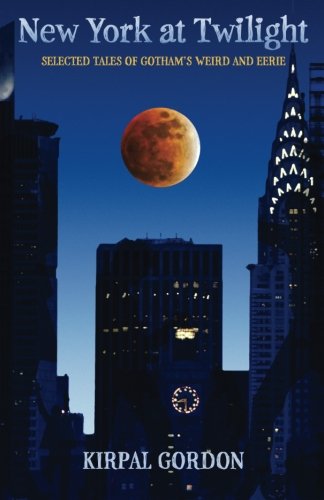
BOOK REVIEW | Crepuscular Dreaming: Kirpal Gordon’s New York at Twilight | by William Seaton

𝘞𝘐𝘓𝘓𝘐𝘈𝘔 𝘚𝘌𝘈𝘛𝘖𝘕 𝘖𝘕 𝘒𝘐𝘙𝘗𝘈𝘓 𝘎𝘖𝘙𝘋𝘖𝘕'𝘚 𝘕𝘌𝘞 𝘠𝘖𝘙𝘒 𝘈𝘛 𝘛𝘞𝘐𝘓𝘐𝘎𝘏𝘛: 𝘈 𝘋𝘙𝘌𝘈𝘔𝘠 𝘋𝘐𝘝𝘌 𝘐𝘕𝘛𝘖 𝘎𝘖𝘛𝘏𝘈𝘔'𝘚 𝘋𝘌𝘗𝘛𝘏𝘚 


In his brilliant review Crepuscular Dreaming, William Seaton dives deep into the world of Kirpal Gordon’s New York at Twilight, a collection where the familiar streets of the city blend seamlessly with dreams, metaphysical musings, and profound art. Seaton highlights how Gordon’s reimagined New York is at once local and universal, echoing T.S. Eliot’s "Unreal City" and Baudelaire’s Paris. With vivid references to real locations like the Kosciuszko Bridge and St. Marks Place, Seaton connects the city's concrete reality with its more elusive, surreal qualities. 

Seaton’s insightful analysis showcases how Gordon uses twilight language—a term rooted in Hindu and Buddhist traditions—to blur the line between the everyday and the cosmic. Each character, whether exploring love, art, or existential truth, is engaged in a quest for deeper meaning, creating stories that transcend the ordinary. Seaton marvels at how Gordon’s narrative, filled with sharp, figurative language and rich soundscapes, begs to be read aloud—each story a "solid narrative" with fully realized characters, leaving the reader eager for more. 

📚 For a full exploration of Gordon’s poetic and metaphysical New York at Twilight, 𝐜𝐡𝐞𝐜𝐤 𝐨𝐮𝐭 𝐒𝐞𝐚𝐭𝐨𝐧'𝐬 𝐜𝐨𝐦𝐩𝐞𝐥𝐥𝐢𝐧𝐠 𝐫𝐞𝐯𝐢𝐞𝐰 below.
Crepuscular Dreaming: Kirpal Gordon’s New York at Twilight (cover image)
Review / Essay (Poetry on the Loose)

Crepuscular Dreaming: Kirpal Gordon’s New York at Twilight

William Seaton • July 1, 2024

A close, thoughtful read of New York at Twilight—twilight language, dream-work, art, eros, and the city’s metaphysical charge.

Read the post →
(Opens in a new tab.)

Saturday, June 27, 2020

Round Earth, Open Sky Revisited: Emily Rivera Interviews Author Kirpal Gordon


EMILY RIVERA: Round Earth, Open Sky was published in 2011. It got great reviews. Why make a second edition nine years later?


KIRPAL GORDON: Flaws kept me up at night. The story needed to get leaner and cleaner. I sped up the third (final) part to help readers feel as if they, like Sky Man, are falling from space, and instead of dying, entering their bodies as if for the first time. I lost two characters but gained for the reader a fuller appreciation of Maurice Plante. By unburying him, the story got more intriguing yet more coherent. Who knew?

But to put your question about time in context, writing REOS stretches way back. It was conceived by accident in 1970 when I read this Ojibwe saying in Technicians of the Sacred: “Sometimes I go about in pity for myself, and all the while a great wind carries me across the sky.” Humility in the face of spirited winds makes sense to me, and the great outdoors has often felt more civilizing than civilization, especially when I lived in Arizona, ‘74-’79, where the first part takes place. Over a campfire on Manitoulin Island one summer night in ’86 I shared my Sonoran Desert adventures with a friend from Detroit. The next day we handed each other short scene descriptions with the invitation to take it further. I collected the scraps; a couple of years later I started to fill in the gaps.

In the first draft, in order to create a sense of time and timelessness interwoven, I alternated chapters from the first and third part. But fragmenting the time line wouldn’t cut it. My dilemma was that the healing method Sky Man practices in the first chapter is something he only learns in the last chapter. I needed to start as close to the end as possible. Since Sky Man is the only character who can collapse past, present and future, I had to trust him to show the human characters that time is an illusion.

In telling a paranormal story about a luftmensch from another dimension, suspending readers’ disbelief is crucial. Hence, every event had to be timely-twisty-switcheroo-ey just like in a murder plot, resolving one problem but creating another. Getting the narrative to unfold smoothly bought Sky Man’s confidence game a little more credibility, you might say. 


EMILY RIVERA: Although throughout this journey it was a supernatural experience, it does seem very natural. While reading the book I got a Jack Kerouac On The Road feeling due to taking us on this adventure to find the truth while interacting with different characters. Do you have any comments on that? 


KIRPAL GORDON: Both are buddy road novels of real people, places and vision quests, but REOS cannot live up to the comparison. On the Road has mythic dimensions. It foretells the back-to-nature rucksack revolution, hitch-hiking Dionysian counterculture and psychedelic Aquarian conspiracy. Kerouac’s Mahayana Buddhism marrying his Roman Catholic St. Therese devotion proved a way out of post-war mutual(ly) assured destruction.

The book reads like an injection. Everything is alive. Like Walt Whitman’s “Song of the Open Road,” the sense of discovery pervades, of containing multitudes, of reinventing America’s experiment with freedom, of reclaiming a larger identity with what Kerouac called the Indio world. And with the world of jazz. Those long rolling sentences curl and swoop, wiggle and writhe like Charlie Parker’s acrobatic alto saxophone solos. Robert Lowell referred to the 1950s as “tranquilized,” but Sal and Dean are popping amphetamines and smoking the chronic, driving into dawn, searching for father/farther-further, seeking Be-at-it-ude, forsaking the “air-conditioned nightmare” of Western civilization and embracing the code of the outsider/bodhisattva.

The fraternal tension between writer Sal and trickster Dean, as well as their sizing up each other, is revealed most effectively by their interactions with the other characters. I hope Moses and Sky Man are doing likewise. Their relationship keeps changing at every stop they make on their road adventure. Like Dean with Sal, otherworldly trickster Sky Man offers photographer Moses another way not only to see things but to participate with the world around him, to embody a larger consciousness.


EMILY RIVERA: Personally, the book reminded me of being in your class and writing on my identity formation. As Alan Watts framed it in The Book: On the Taboo against Knowing Who You Are, “We need a new experience, a new feeling of what it is to be I. Just as sight is more than all things seen, the foundation or ground of our existence and our awareness cannot be understood in terms of things that are known.”

What kind of identity were you trying to build for your characters in REOS?


KIRPAL GORDON: An identity that accepts, per your Watts’ quote, it can never be fully known. Like your essay, “I Dare You,” https://giantstepspress.blogspot.com/2018/10/i-dare-you-reflections-on-identity-by.html, Sky Man celebrates himself as non-binary, always changing and therefore nothing to get hung about. Whoever he comes in contact with alters him, yet he treats each change in his identity as merely the next “alias disguise” he must wear in order to get to the appointed place at the appointed hour.


EMILY RIVERA: So is he a hero or hustler, a villain or victor, an immortal tricked by human sorcery or the immortal trickster himself incarnate?

But in framing the question into either/or form, am I missing the bigger picture? That is, are you suggesting the entity called Sky Man can be embodied in many forms or are you leaving these decisions about his identity up to the reader?


KIRPAL GORDON: Readers must solve for themselves the question of Sky Man’s multiple identities by cohering all of his parts. So instead of who-done-it driving the plot, who-is-it drives REOS.


EMILY RIVERA: There are multiple themes of love and connection between Sky Man and Moses, among his other interactions with women, but also between Moses and his women. On the ferry Marie Twiceborn tells Rainie that strange things happen on the Isle of Oanay: “Some say that forgotten impulses, held down by regret and denial, appear at the unlikeliest of places. For example, one’s desire is made flesh. To long for a certain lover is to see him walking toward you out of the woods, calling your name out sweet and low.” What is the significance of these parallel characteristics or recurring theme of love? 


KIRPAL GORDON: Every character in the story gets a first, second or third chance at love. It’s the medicine Sky Man brings and why he’s bound for the Isle of Oanay. Although he’s new to the ways of humans, he’s no fool. Whoever women proclaim him to be, he’s willing to be: tube-suck doctor, Hey-sus Christay lovemaker, Navaho love counselor, Rebbe Yeshuwa, Dionysus Lysios, time-traveling shaman, necromancer, schlubby Maurice Plante, mad medicine man Red Plante, Ojibwe manitou Nanabozho. Each name and subsequent story bring him closer to his home. They show him that love is his mission and his destiny.

As for Moses, for whom love is a catastrophe in the making, for the first time in his life he gets lucky at every port in the storm, thanks to a mind-reading Sky Man who speaks the sexy love thoughts that Moses and his women are only thinking. Consequently, Moses and Sky Man develop a strong but conflicted connection in the first part and a growing understanding in the second part, but it’s not until the third part that you realize Moses and his photography quest have been driving the action the whole time. Borealis Cove has been his destination all along. Contrary to all the alleged evidence, Sky Man is just along for the ride.


EMILY RIVERA: What are you hoping for the reader to learn from this book? What’s the purpose? Regarding Moses’s motives for making art you write: “Casting doubt had been Moses’ style as a photographer—to search underneath appearances, to stir a little gray into the black-and-white world.” Do you want to bewitch, bother and bewilder readers in order to have the last laugh or are you helping us access a deeper vibrational intimacy with what we can’t see but sense is out there?


KIRPAL GORDON: It’s a good question. I admit that having a telepathic space man trying to make sense of the world he’s visiting really helped me cast doubt on earthling ways and reveal our limited thinking. As for the book’s possible purpose, I don’t know.

Friends who saw early versions said that after reading the manuscript they dreamed vividly; I took this as a propitious sign. Readers of later versions liked the way landscape, plot and dialogue dovetailed; they called it a page turner. In later versions readers said they got into playing detective, figuring out the characters’ motives. Readers of this new version remarked on how much clearer is the narrative flow, how its smooth lake-like surface keeps every possible ending up for interpretation.

Another way of saying this is that the story has always been a crossword puzzle/ rubric cube. I’ve had to keep writing it until all the pieces fell into place.


EMILY RIVERA: The print and e-book versions are for sale at the Writer page at www.KirpalG.com. Here are a few reviews for the first edition of Round Earth, Open Sky:


Amazing book, start to finish! The work draws its compassionate hybrid vision from American Indian, Buddhist, and Judeo/Christian mysticisms as well as its celebration of compassion and open-heartedness, elements of the author’s own aesthetic lineage and varied personal experience. But it’s the meta-elements of the work that are so profound, the great truths wrapped within magic characters in picaresque multiverse landscapes from the Arizona deserts to the lakes of Michigan wilds, and centered around the psychic trans-spiritual figure of Sky Man from whom we regain an eternal delight in the power of language we widely inhabit, which is also our world. By far, the best novel I’ve read of my generation; Gordon has created a work of holy parables.

—Jim Cohn


Naked, animal-like, a curious alien being slips out from the US-Mexican desert landscape to mingle on the margins of civilization, a sky-man inhabiting the body of an unidentified dead son. Like a new born unraveling the needs of its new form, his journey is both disorienting & very entertaining. He pieces together the meanings of our world & his own purpose for time spent among us, helped by his host-body’s lingering memories & those of a wild range of encountered characters. Shifting details of 21st C. life are everywhere evident. We get intimate access to a cosmic awakening. Round Earth, Open Sky is a remarkably inventive novel. The fusion of sci-fi & mystery together with indigenous elements make for an exciting first-class ride, flawlessly executed. Gordon’s writing here seems the perfect salve for a US that has lost what little humanity it once pretended to have.

—Steve Voliva


A masterpiece of creative invention. Sky Man and Moses Abitol are an odd couple, to be sure. But Abitol, a New York freelance photographer (a visual person, a wanderer), is Gordon’s particular stroke of genius, by mating him with Sky Man, this mysterious, magical character, who drops out the sky, whose mission is to “mend the tear in the world” and return to his cosmic home. It’s a journey of enlightenment, where earthly values are often skewed when pitted against a competing universe of existing myths and legends and cultures, and other pathways not easily explainable, but ever present in the universe’s consciousness. A joy to read because of its brilliant imagery, brilliant language, the strength of its characters, its storytelling; and the ride: wild and wooly; and fearlessly imagined to depths rarely seen, or, for that matter, so effectively engaged.

—Denis Gray


A must read. Kirpal Gordon has written a tour de force that takes you on a journey from the magical realm of New Mexico to Detroit and Canada. From the first page you are taken in by the mysticism and magic of Sky Man and by the end of the book you believe in his powers. Everyone who reads this masterpiece will be able to identify with at least one of the characters and relate to the experiences they have as they are enumerated upon in this truly engrossing book. Gordon’s imagination is unsurpassed and his ability to draw the reader in with a mix of humor, mysticism, reality and tenderness is amazing. The book is poetry in a narrative form. It is as if Elmore Leonard has met Carlos Castaneda and as Gordon takes you on the road trip of your life you will not be able to stop until you reach the end. I know I couldn’t. As soon as I finished the book, I wanted him to write a sequel so that I could renter his magical world.

—David A. Safran


Round Earth, Open Sky is altogether a marvelous read, constantly forcing me as reader to re-adjust my grasp of its multiple narratives, to reexamine the nature of identity itself, and to confront the mystery of “mending the tear in the world.” The finale alternately had me jumping up and down regarding Kirpal’s moving the characters in among the manitous of my own region and wondering at the beauty of its Jungian & Freudian overtones, its mythos of buried folklore, its wisdom filtering from many spiritual traditions

—David Cope


In Round Earth, Open Sky, Kirpal Gordon presents an alternative mind cosmology, countering the prevalent materialism/cultural hegemony with a shamanic telepathy that employs an inventive picture theory language ESP. This is depicted through Sky Man’s visitation in southwestern USA in an entertaining, incisive prose narration. A must read for anthropologists, poets, lovers of fiction and readers seeking a peek behind the cosmic mirror.

David Stone


Combine one part Homer’s Odyssey with one part Kerouac’s On the Road and multiple parts of the unfettered imagination of a virtuoso writer and what you have is Kirpal Gordon’s Round Earth, Open Sky. An epic tale of cosmic adventure, funhouse surprise and spiritual exploration. Gordon wields his pen like a great Jazz trumpeter with the funky abandon of Lee Morgan, the sardonic wit of Lester Bowie, the razor-sharp articulation of Clifford Brown and the cool mysterioso of Miles Davis. Climb aboard this rollicking express train to uncharted vistas and hang on tight!

—M Cann


Kirpal Gordon has written a strangely unique yet captivating tale which takes the reader upon the mother of all road trips. Round Earth Open Sky is a high-spirited romp along the landscape of Americana up into the Canadian wilderness with two of the most oddball personalities, Sky Man, an alien life form living in the body of a resurrected dead human, and Moses, a hard-edged New York photographer who wrongly thought he’d seen everything! Gordon's latest novel is a gripping sci-fi mystery chock full of interesting characters and intriguing plot twists. REOS held my interest right up until the very last chapter where Sky Man’s earthly journey ends with the discovery of the portal that finally leads him home. You won’t want to put it down!

—Johnny Rinaldo


Gordon slings each word of his story as he sings his poems, provoking your interest to the point of frenzy as he takes you in all directions on all levels sometimes simultaneously. Who is Sky Man and why is his chosen guide out of the desert a Jewish man named Moses? Fall into the fantasy-based reality or is it reality-based fantasy?

—Maria Elizabeth


Together with Stephen-Paul Martin, Eric Basso, Greg Boyd and Tom Whalen, Kirpal Gordon is one of the best American storytellers of the last 20 years. Round Earth, Open Sky is a fun, mystical road trip from the Land of the Hopi to Manitoulin Island. Hip readers should snatch up REOS and Go Ride the Music, and then explore his whole catalog.

Paul Rosheim


A mystical healer falls from the sky, inhabits the body of a newly dead Native American and begins a journey to find his way back home. He soon pairs up with “Moses,” a skeptical, yet intrigued photojournalistic philosopher, running from his past, trying to save the future and hoping for a Pulitzer Prize photo op. Initially, the Sky Man (as he is soon dubbed) does not do well with language, which renders some interesting nicknames for people he meets. In a series of missions, each with a clue/vision/tool to the next one in line, he must prove himself to be who he is to the multiplying skeptics. As adept as any Kwai Chang Caine, Sky Man conquers all obstacles affronting him, be they to harm, educate or seduce. Talismans, totems and spirit guides are offered, shared and experienced along the roads of a countryside still beautiful, as we are shown it through the eyes of respect and adoration. Given the abundance of Native American characters within the pages, there is a hefty dose of metaphysical—natural teachings, lingo and rituals, which I personally devoured, dictionary and internet at hand. The injection of humor eases the intensity of content, blunders and missteps allow a humanistic perspective when broaching an almost peyote-infused ride into desert, mountains and prairies. Round Earth, Open Sky is fast-paced and covers multiple genres and fulfills in each. Witty, deep, violent & sensual. In final scene intensity, words before you, you still cannot blink, lest you miss that transformation, that flash of light, that perfect shot that finishes his journey. Loose ends tie up into a nice dreamcatcher to hang over you as tidbits flit into your slumber.

Cheryl A. Townsend


A fascinating portrayal of connectedness—textured characters involved in their own AND interrelated paths. Spiritual and physical worlds interwoven through poetic language.

—Janet A. Bellusci


Reading the novel, it struck me that one of those Chinese balls meticulously carved from a solid piece of ivory, rendering moveable layered spheres, where each sphere turns and each can be perceived simultaneously works well as being emblematic of the landscape. At a glance, one can see the sky, the earth with its multiple layers and patina--the now of it; digs, rituals, and dances--all existing, synchronized and grasped concurrently. I appreciated Gordon’s layering and gradation of seams with cinematic Godardian jump cuts creating strong transitional movement from one character/scene to another. Also liked the loop of how early on landscape is used as character and anchor and similarly presented and utilized at the end. An arc that mirrored Sky Man’s path. I was on the journey and sometimes found myself in Moses’s skin, sharing his body movements and thoughts. I was behind the wheel on HW 40, making the turns in Oak Creek Canyon. In other places images of the Hohokam, Hopi, and Orabi smashed against my windshield. I found Sky Man’s humor and manner of speaking entertaining. He is also a more accessible and rounded character than Don Juan Matus. Moses made a film. I gather that was something shot on 16mm. With the mentioning of light readings and using the small / tiny Leica it seemed he probably shot with 4 X 5s or and 8 X 10 cameras--which would follow if he was focusing on landscapes. Interesting, too, his occupation captures what has passed. I was pleased with the way Gordon pulled me in. Well done.

—Harry Burrus


It seems like Gordon is putting us in a magical world well grounded in reality where we root around and make surprising connections. But in the end, we realize he is having so much fun with us that we have to laugh with him at ourselves. Round Earth, Open Sky is thoroughly amusing and very, very smart.

Anatole Iwanczuk


If you told me that a book could contain a road trip across North America, time travel, mind reading, bodily possession, and not be a corny mess but, rather, a deeply moving and poetic piece, I would have called you a liar. Until now, of course. Kirpal Gordon's Round Earth, Open Sky is a genius piece of prose that reads more like beat poetry for the next goyim generation. I enjoyed every page I traveled with Sky-Man and his road-bromance partner, Moses Dude. I tore through this book in 2 days, the kind of book I never would have thought I'd like. I love it more than words can say.

—Justin Luke


If you think that all supernatural fiction has to do with zombies, vampires and blood sucking corpses, then you might want to take a look at Round Earth Open Sky by Kirpal Gordon. The work is outstanding in its prose and very believable in its plot. This is the sort of supernatural tale that just may be happening all around us all the time but if you’re not the subject, then you might never notice what’s going on. Someone from the ‘other side’ gets sucked into this existence and then must work their way back through the portal, once they find out how to locate that portal, but you’ll have to read it to make your personal assessment of just how that is. It’s not poetry but it reads that way and it’s just as much a joy to re-read it, as you’d swear that things weren’t there the first time have somehow popped into the text. The ideas that you had about the characters change just as quickly as if they are all chameleons. This is a powerful read.

—JDP


I just finished reading Round Earth, Open Sky out loud with my wife. It was great fun, an outlandish, cheeky story, sprouting new connections and changes through to the very end. We enjoyed doing the voices including Sky Man's pidgin. This should surely be made into a movie. It's a mystery/science fiction/transcendental adventure that is genuinely innovative as well as beautiful and entertaining.

Ezra


The writing is compelling, rich with eroticism and suspense. The plot with its twists and turns is impossible to summarize because it is as much a journey of the reader’s mind as it is a physical journey of an unforgettable character and his photographer friend in search of identity and meaning is a world that has shaken off its boundaries and brought us to the “point of intersection of the timeless with time.” It is a book which will certainly attract readers who are on their own spiritual journey and who suspect that “there is another world, and it’s in this one.”

—Dr. Michael Hogan