Step into a gritty, mytho-poetic retelling of a timeless legend, straight from the heart of New York’s industrial wastelands. In "Orpheus in Heavy Metal," a young musical prodigy known as Kid Orpheus rises from the grime of Brooklyn’s waterfront to rule the underworld with his electric lyre and haunting blues. But in a world where sewage treatment plants and ghostly rivers meet the heavy metals of human sorrow, love and loss blur the line between life and death. This story captures the raw edge of redemption and the painful truths that come with looking back.
Check out this modern take on ancient myth, where the music never stops—until it does.

📝 𝙾𝚛𝚙𝚑𝚎𝚞𝚜 𝚒𝚗 𝙷𝚎𝚊𝚟𝚢 𝙼𝚎𝚝𝚊𝚕
Coming of age in grease and grime across the street from Brooklyn’s sewage treatment plant 3where everyone in the neighborhood worked, the young musical composer played to a tee the part of the cog that would not turn the big wheel. Amidst whirling machine hums and an odor of utmost funk, he sang the blues down on the corner under a street lamp in the evening with the local wise guys. His enchanting chord progressions on his electric lyre hunted the shadows in the human heart and he learned to kill sorrow with an awesome solo. His music gave love another chance and reminded his audience to walk and not look back. His name became Kid Orpheus.
Navigating the triple X poisons amidst the flotsam and jetsam upchucked onto his yard by Newtown Creek, the world’s most polluted estuary, Kid O found his band work playing not the waterfront but the world below. Since all rivers saved their sediment for the sea, the kid knew what lament to find there among the detritus, the shipwrecked and the cement-shoed. Whatever got caught in the storm gate’s grates—animal or human, old timer or fetus, caked in muck, mixed with roots, trees and car parts piling into a backlog—he could prevent the maelstrom. He understood dismemberment. He sang their remains to the other shore.
Coming up knocking around with the broken down, the nitwit rotten apple chip on the shoulder rictus grin, bashing into whatever denied him, he did not mind life below the sun. The dead were a huge audience and grateful for the live music; his band soon ruled the underworld. But after every show he sat alone and waited for the end of all sound, the click and disappear of grinding gears, every machine’s motor hum stopped still. In those few moments, free of metal and chains, lyrics and musical notes came to him wed to one another.
April storms broke open the sky and flooded his subterranean home, and on the third day, according to the district attorney, Orpheus ascended. Lifting a manhole cover, he climbed up onto the steamy wet street. The sun shone like a tablet of Alka Seltzer pulsing in the sky’s blue belly a radiance bright enough for spring to peek in, the here-we-go-again that made blossoms of the bottom of the scrap heap.
Ancient longings and redemption quests filled his bloodstream and the kid shouted out his twelve bars of blues: “Jesus was a turbine when he walked upon the waters and said all humans shall be machines until the sea of song shall free them.” And just when he knew for certain only drowning men could see him, Kid Orpheus felt the wind carry his lyrics across the oil-slicked creek that divided Brooklyn and Queens.
A comely young nymph rose from Sunswick, crossed the Kosciusko Bridge and found him on his street corner thriving on a riff. The maiden called herself Eurydice and boldly asked, “What has singing the blues ever done for you, Kid?”
“It’s brought you here though it’s not the best setting for my music,” he told her.
“Take me to the best setting then,” she said, already a-mesmered.
Below the treatment plant’s sewers and tunnels, they walked past abandoned subway stations, crossed rivers of lament, saw spectral presences peeking out everywhere before settling into Kid O’s dry and candlelit musical chamber. With acoustics to die for, Eurydice danced the night away in naked love joy to the killing music that poured from his lips and lyre.
Bumping up against the marked and ill-fated, absorbing with thin skin the creek’s heavy metals, relief had been in the grim, the inevitable facts of copper and brass, that no matter how far into the earth one had to dig, one came up with something one could melt down and play: a silver flute, a Harmon mute, Adolph Sax’s gold suit shining. Now Kid O’s music was proving its mettle. Great arrangements led to great improvisations and night after night on the bandstand love was revelation. But when word reached him that his father had fallen into the settling tank at the sewage treatment plant, he left Eurydice to see for himself.
Against the relentless drone of motors, the big tank turned, rumbled and burped. Kid O, no stranger to the rotten, found his begetter’s severed head face down atop a mound of sludge. He fished out the rest of his pater’s remains as they floated around an island of condoms that resembled odd-shaped jellyfish buoyed on the surface of the scum tide.
At the burial Kid Orpheus sang the elegy of gone-too-soon and everyone, even rocks and trees, wept for gene pool renewal. As his uncles lowered the casket six feet under, he assured the assembled that the music in Hades was excellent and hymned their solemn and inevitable return down underground. But walking out of the cemetery alone, woe and uncertainty overtook him. He wondered: had his father jumped or fallen accidentally or been pushed? Had he been killed somewhere else and dumped here? By doing his duty as a son, retrieving his old man, had he been duped into aiding and abetting his father’s killers? Why was there no autopsy?
To add trouble to his mourning the police stopped him on his way to Eurydice. He could produce no address above ground and was arrested for attempted necromancy and vagrancy. Brought to the Tombs he sat behind bars, reduced to a cell block’s lock and key.
Vile were the aspersions cast upon his person the next day. The district attorney asserted that the accused was known to be the only local not to work in the treatment plant. Not only was he ungrateful and critical, the DA insisted, but living among the dead had turned the fatherless vagrant into a musician hellbent on revenge against the wheels of progress, against life itself. Accusing the kid of dredging up what civilized people knew was better to flush away, the DA declared that his sense of worth was in the sewer! As for the felony of bringing the dead back to life, the DA assured the jury that Orpheus’ skills were well known east of the Styx and dared the musician to play for the court: “Kid, you’ll be dangling from the hanging tree if you do.”
Having grown up rushing into broken bones, bitter lumps and sucker punches, longing to unclog the clump at held-in heart and rasp of throat, Kid Orpheus turned on his amp and plugged in his lyre, reverb and wah wah pedal. After slowly tuning his strings to the ears of the courtroom, he burned into melodic runs that wailed remorse and unleashed unbearable sorrow. His cups of words overflowed with such aching grief that every machine in Newtown Creek stopped working. Nothing moved.
In the quiet his father’s shade hovered over the courtroom. The kid had found the string of notes that opened the portal to Hades, and every dead father and mother of everyone in the room soon appeared as well. It was a great gift; no one wanted it to end. Orpheus had made a strong case in his defense and he might have let his last note just fade away, but he erupted into a gut-bucket run so low-down lonesome and woe-be-gone that the DA broke down in tears and the judge dismissed the charges.
The courtroom broke out in pandemonium. Amidst much congratulations and commotion, Kid O failed to see the maenads in the gallery. Agitated by his music they tore out their hair and began to run toward him. And then, in search of his love, despite every warning he had given and been given, Orpheus looked back. He watched tearful Eurydice fade into the ether as the maenads ripped off his clothes and screamed a wild and mad unearthly sound.
Then they were upon him.
🛒 𝗔𝗩𝗔𝗜𝗟𝗜𝗕𝗟𝗘 𝗡𝗢𝗪:
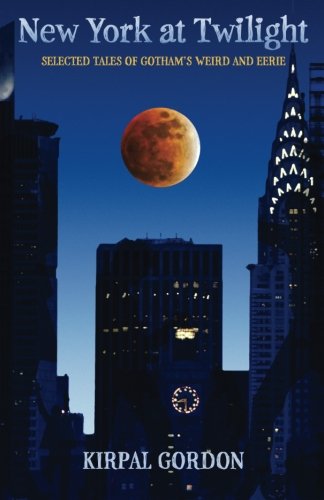
Available on Amazon
New York at Twilight
Selected Tales of Gotham’s Weird & Eerie
A collection of twilight-zone NYC tales—eerie, lyrical, and strange.
View on Amazon →
(Link opens in a new tab.)

