Showing posts with label identity. Show all posts

Saturday, June 27, 2020

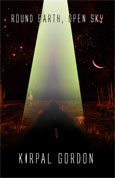
Round Earth, Open Sky Revisited: Emily Rivera Interviews Author Kirpal Gordon


EMILY RIVERA: Round Earth, Open Sky was published in 2011. It got great reviews. Why make a second edition nine years later?


KIRPAL GORDON: Flaws kept me up at night. The story needed to get leaner and cleaner. I sped up the third (final) part to help readers feel as if they, like Sky Man, are falling from space, and instead of dying, entering their bodies as if for the first time. I lost two characters but gained for the reader a fuller appreciation of Maurice Plante. By unburying him, the story got more intriguing yet more coherent. Who knew?

But to put your question about time in context, writing REOS stretches way back. It was conceived by accident in 1970 when I read this Ojibwe saying in Technicians of the Sacred: “Sometimes I go about in pity for myself, and all the while a great wind carries me across the sky.” Humility in the face of spirited winds makes sense to me, and the great outdoors has often felt more civilizing than civilization, especially when I lived in Arizona, ‘74-’79, where the first part takes place. Over a campfire on Manitoulin Island one summer night in ’86 I shared my Sonoran Desert adventures with a friend from Detroit. The next day we handed each other short scene descriptions with the invitation to take it further. I collected the scraps; a couple of years later I started to fill in the gaps.

In the first draft, in order to create a sense of time and timelessness interwoven, I alternated chapters from the first and third part. But fragmenting the time line wouldn’t cut it. My dilemma was that the healing method Sky Man practices in the first chapter is something he only learns in the last chapter. I needed to start as close to the end as possible. Since Sky Man is the only character who can collapse past, present and future, I had to trust him to show the human characters that time is an illusion.

In telling a paranormal story about a luftmensch from another dimension, suspending readers’ disbelief is crucial. Hence, every event had to be timely-twisty-switcheroo-ey just like in a murder plot, resolving one problem but creating another. Getting the narrative to unfold smoothly bought Sky Man’s confidence game a little more credibility, you might say. 


EMILY RIVERA: Although throughout this journey it was a supernatural experience, it does seem very natural. While reading the book I got a Jack Kerouac On The Road feeling due to taking us on this adventure to find the truth while interacting with different characters. Do you have any comments on that? 


KIRPAL GORDON: Both are buddy road novels of real people, places and vision quests, but REOS cannot live up to the comparison. On the Road has mythic dimensions. It foretells the back-to-nature rucksack revolution, hitch-hiking Dionysian counterculture and psychedelic Aquarian conspiracy. Kerouac’s Mahayana Buddhism marrying his Roman Catholic St. Therese devotion proved a way out of post-war mutual(ly) assured destruction.

The book reads like an injection. Everything is alive. Like Walt Whitman’s “Song of the Open Road,” the sense of discovery pervades, of containing multitudes, of reinventing America’s experiment with freedom, of reclaiming a larger identity with what Kerouac called the Indio world. And with the world of jazz. Those long rolling sentences curl and swoop, wiggle and writhe like Charlie Parker’s acrobatic alto saxophone solos. Robert Lowell referred to the 1950s as “tranquilized,” but Sal and Dean are popping amphetamines and smoking the chronic, driving into dawn, searching for father/farther-further, seeking Be-at-it-ude, forsaking the “air-conditioned nightmare” of Western civilization and embracing the code of the outsider/bodhisattva.

The fraternal tension between writer Sal and trickster Dean, as well as their sizing up each other, is revealed most effectively by their interactions with the other characters. I hope Moses and Sky Man are doing likewise. Their relationship keeps changing at every stop they make on their road adventure. Like Dean with Sal, otherworldly trickster Sky Man offers photographer Moses another way not only to see things but to participate with the world around him, to embody a larger consciousness.


EMILY RIVERA: Personally, the book reminded me of being in your class and writing on my identity formation. As Alan Watts framed it in The Book: On the Taboo against Knowing Who You Are, “We need a new experience, a new feeling of what it is to be I. Just as sight is more than all things seen, the foundation or ground of our existence and our awareness cannot be understood in terms of things that are known.”

What kind of identity were you trying to build for your characters in REOS?


KIRPAL GORDON: An identity that accepts, per your Watts’ quote, it can never be fully known. Like your essay, “I Dare You,” https://giantstepspress.blogspot.com/2018/10/i-dare-you-reflections-on-identity-by.html, Sky Man celebrates himself as non-binary, always changing and therefore nothing to get hung about. Whoever he comes in contact with alters him, yet he treats each change in his identity as merely the next “alias disguise” he must wear in order to get to the appointed place at the appointed hour.


EMILY RIVERA: So is he a hero or hustler, a villain or victor, an immortal tricked by human sorcery or the immortal trickster himself incarnate?

But in framing the question into either/or form, am I missing the bigger picture? That is, are you suggesting the entity called Sky Man can be embodied in many forms or are you leaving these decisions about his identity up to the reader?


KIRPAL GORDON: Readers must solve for themselves the question of Sky Man’s multiple identities by cohering all of his parts. So instead of who-done-it driving the plot, who-is-it drives REOS.


EMILY RIVERA: There are multiple themes of love and connection between Sky Man and Moses, among his other interactions with women, but also between Moses and his women. On the ferry Marie Twiceborn tells Rainie that strange things happen on the Isle of Oanay: “Some say that forgotten impulses, held down by regret and denial, appear at the unlikeliest of places. For example, one’s desire is made flesh. To long for a certain lover is to see him walking toward you out of the woods, calling your name out sweet and low.” What is the significance of these parallel characteristics or recurring theme of love? 


KIRPAL GORDON: Every character in the story gets a first, second or third chance at love. It’s the medicine Sky Man brings and why he’s bound for the Isle of Oanay. Although he’s new to the ways of humans, he’s no fool. Whoever women proclaim him to be, he’s willing to be: tube-suck doctor, Hey-sus Christay lovemaker, Navaho love counselor, Rebbe Yeshuwa, Dionysus Lysios, time-traveling shaman, necromancer, schlubby Maurice Plante, mad medicine man Red Plante, Ojibwe manitou Nanabozho. Each name and subsequent story bring him closer to his home. They show him that love is his mission and his destiny.

As for Moses, for whom love is a catastrophe in the making, for the first time in his life he gets lucky at every port in the storm, thanks to a mind-reading Sky Man who speaks the sexy love thoughts that Moses and his women are only thinking. Consequently, Moses and Sky Man develop a strong but conflicted connection in the first part and a growing understanding in the second part, but it’s not until the third part that you realize Moses and his photography quest have been driving the action the whole time. Borealis Cove has been his destination all along. Contrary to all the alleged evidence, Sky Man is just along for the ride.


EMILY RIVERA: What are you hoping for the reader to learn from this book? What’s the purpose? Regarding Moses’s motives for making art you write: “Casting doubt had been Moses’ style as a photographer—to search underneath appearances, to stir a little gray into the black-and-white world.” Do you want to bewitch, bother and bewilder readers in order to have the last laugh or are you helping us access a deeper vibrational intimacy with what we can’t see but sense is out there?


KIRPAL GORDON: It’s a good question. I admit that having a telepathic space man trying to make sense of the world he’s visiting really helped me cast doubt on earthling ways and reveal our limited thinking. As for the book’s possible purpose, I don’t know.

Friends who saw early versions said that after reading the manuscript they dreamed vividly; I took this as a propitious sign. Readers of later versions liked the way landscape, plot and dialogue dovetailed; they called it a page turner. In later versions readers said they got into playing detective, figuring out the characters’ motives. Readers of this new version remarked on how much clearer is the narrative flow, how its smooth lake-like surface keeps every possible ending up for interpretation.

Another way of saying this is that the story has always been a crossword puzzle/ rubric cube. I’ve had to keep writing it until all the pieces fell into place.


EMILY RIVERA: The print and e-book versions are for sale at the Writer page at www.KirpalG.com. Here are a few reviews for the first edition of Round Earth, Open Sky:


Amazing book, start to finish! The work draws its compassionate hybrid vision from American Indian, Buddhist, and Judeo/Christian mysticisms as well as its celebration of compassion and open-heartedness, elements of the author’s own aesthetic lineage and varied personal experience. But it’s the meta-elements of the work that are so profound, the great truths wrapped within magic characters in picaresque multiverse landscapes from the Arizona deserts to the lakes of Michigan wilds, and centered around the psychic trans-spiritual figure of Sky Man from whom we regain an eternal delight in the power of language we widely inhabit, which is also our world. By far, the best novel I’ve read of my generation; Gordon has created a work of holy parables.

—Jim Cohn


Naked, animal-like, a curious alien being slips out from the US-Mexican desert landscape to mingle on the margins of civilization, a sky-man inhabiting the body of an unidentified dead son. Like a new born unraveling the needs of its new form, his journey is both disorienting & very entertaining. He pieces together the meanings of our world & his own purpose for time spent among us, helped by his host-body’s lingering memories & those of a wild range of encountered characters. Shifting details of 21st C. life are everywhere evident. We get intimate access to a cosmic awakening. Round Earth, Open Sky is a remarkably inventive novel. The fusion of sci-fi & mystery together with indigenous elements make for an exciting first-class ride, flawlessly executed. Gordon’s writing here seems the perfect salve for a US that has lost what little humanity it once pretended to have.

—Steve Voliva


A masterpiece of creative invention. Sky Man and Moses Abitol are an odd couple, to be sure. But Abitol, a New York freelance photographer (a visual person, a wanderer), is Gordon’s particular stroke of genius, by mating him with Sky Man, this mysterious, magical character, who drops out the sky, whose mission is to “mend the tear in the world” and return to his cosmic home. It’s a journey of enlightenment, where earthly values are often skewed when pitted against a competing universe of existing myths and legends and cultures, and other pathways not easily explainable, but ever present in the universe’s consciousness. A joy to read because of its brilliant imagery, brilliant language, the strength of its characters, its storytelling; and the ride: wild and wooly; and fearlessly imagined to depths rarely seen, or, for that matter, so effectively engaged.

—Denis Gray


A must read. Kirpal Gordon has written a tour de force that takes you on a journey from the magical realm of New Mexico to Detroit and Canada. From the first page you are taken in by the mysticism and magic of Sky Man and by the end of the book you believe in his powers. Everyone who reads this masterpiece will be able to identify with at least one of the characters and relate to the experiences they have as they are enumerated upon in this truly engrossing book. Gordon’s imagination is unsurpassed and his ability to draw the reader in with a mix of humor, mysticism, reality and tenderness is amazing. The book is poetry in a narrative form. It is as if Elmore Leonard has met Carlos Castaneda and as Gordon takes you on the road trip of your life you will not be able to stop until you reach the end. I know I couldn’t. As soon as I finished the book, I wanted him to write a sequel so that I could renter his magical world.

—David A. Safran


Round Earth, Open Sky is altogether a marvelous read, constantly forcing me as reader to re-adjust my grasp of its multiple narratives, to reexamine the nature of identity itself, and to confront the mystery of “mending the tear in the world.” The finale alternately had me jumping up and down regarding Kirpal’s moving the characters in among the manitous of my own region and wondering at the beauty of its Jungian & Freudian overtones, its mythos of buried folklore, its wisdom filtering from many spiritual traditions

—David Cope


In Round Earth, Open Sky, Kirpal Gordon presents an alternative mind cosmology, countering the prevalent materialism/cultural hegemony with a shamanic telepathy that employs an inventive picture theory language ESP. This is depicted through Sky Man’s visitation in southwestern USA in an entertaining, incisive prose narration. A must read for anthropologists, poets, lovers of fiction and readers seeking a peek behind the cosmic mirror.

—David Stone


Combine one part Homer’s Odyssey with one part Kerouac’s On the Road and multiple parts of the unfettered imagination of a virtuoso writer and what you have is Kirpal Gordon’s Round Earth, Open Sky. An epic tale of cosmic adventure, funhouse surprise and spiritual exploration. Gordon wields his pen like a great Jazz trumpeter with the funky abandon of Lee Morgan, the sardonic wit of Lester Bowie, the razor-sharp articulation of Clifford Brown and the cool mysterioso of Miles Davis. Climb aboard this rollicking express train to uncharted vistas and hang on tight!

—M Cann


Kirpal Gordon has written a strangely unique yet captivating tale which takes the reader upon the mother of all road trips. Round Earth Open Sky is a high-spirited romp along the landscape of Americana up into the Canadian wilderness with two of the most oddball personalities, Sky Man, an alien life form living in the body of a resurrected dead human, and Moses, a hard-edged New York photographer who wrongly thought he’d seen everything! Gordon's latest novel is a gripping sci-fi mystery chock full of interesting characters and intriguing plot twists. REOS held my interest right up until the very last chapter where Sky Man’s earthly journey ends with the discovery of the portal that finally leads him home. You won’t want to put it down!

—Johnny Rinaldo


Gordon slings each word of his story as he sings his poems, provoking your interest to the point of frenzy as he takes you in all directions on all levels sometimes simultaneously. Who is Sky Man and why is his chosen guide out of the desert a Jewish man named Moses? Fall into the fantasy-based reality or is it reality-based fantasy?

—Maria Elizabeth


Together with Stephen-Paul Martin, Eric Basso, Greg Boyd and Tom Whalen, Kirpal Gordon is one of the best American storytellers of the last 20 years. Round Earth, Open Sky is a fun, mystical road trip from the Land of the Hopi to Manitoulin Island. Hip readers should snatch up REOS and Go Ride the Music, and then explore his whole catalog.

—Paul Rosheim


A mystical healer falls from the sky, inhabits the body of a newly dead Native American and begins a journey to find his way back home. He soon pairs up with “Moses,” a skeptical, yet intrigued photojournalistic philosopher, running from his past, trying to save the future and hoping for a Pulitzer Prize photo op. Initially, the Sky Man (as he is soon dubbed) does not do well with language, which renders some interesting nicknames for people he meets. In a series of missions, each with a clue/vision/tool to the next one in line, he must prove himself to be who he is to the multiplying skeptics. As adept as any Kwai Chang Caine, Sky Man conquers all obstacles affronting him, be they to harm, educate or seduce. Talismans, totems and spirit guides are offered, shared and experienced along the roads of a countryside still beautiful, as we are shown it through the eyes of respect and adoration. Given the abundance of Native American characters within the pages, there is a hefty dose of metaphysical—natural teachings, lingo and rituals, which I personally devoured, dictionary and internet at hand. The injection of humor eases the intensity of content, blunders and missteps allow a humanistic perspective when broaching an almost peyote-infused ride into desert, mountains and prairies. Round Earth, Open Sky is fast-paced and covers multiple genres and fulfills in each. Witty, deep, violent & sensual. In final scene intensity, words before you, you still cannot blink, lest you miss that transformation, that flash of light, that perfect shot that finishes his journey. Loose ends tie up into a nice dreamcatcher to hang over you as tidbits flit into your slumber.

—Cheryl A. Townsend


A fascinating portrayal of connectedness—textured characters involved in their own AND interrelated paths. Spiritual and physical worlds interwoven through poetic language.

—Janet A. Bellusci


Reading the novel, it struck me that one of those Chinese balls meticulously carved from a solid piece of ivory, rendering moveable layered spheres, where each sphere turns and each can be perceived simultaneously works well as being emblematic of the landscape. At a glance, one can see the sky, the earth with its multiple layers and patina--the now of it; digs, rituals, and dances--all existing, synchronized and grasped concurrently. I appreciated Gordon’s layering and gradation of seams with cinematic Godardian jump cuts creating strong transitional movement from one character/scene to another. Also liked the loop of how early on landscape is used as character and anchor and similarly presented and utilized at the end. An arc that mirrored Sky Man’s path. I was on the journey and sometimes found myself in Moses’s skin, sharing his body movements and thoughts. I was behind the wheel on HW 40, making the turns in Oak Creek Canyon. In other places images of the Hohokam, Hopi, and Orabi smashed against my windshield. I found Sky Man’s humor and manner of speaking entertaining. He is also a more accessible and rounded character than Don Juan Matus. Moses made a film. I gather that was something shot on 16mm. With the mentioning of light readings and using the small / tiny Leica it seemed he probably shot with 4 X 5s or and 8 X 10 cameras--which would follow if he was focusing on landscapes. Interesting, too, his occupation captures what has passed. I was pleased with the way Gordon pulled me in. Well done.

—Harry Burrus


It seems like Gordon is putting us in a magical world well grounded in reality where we root around and make surprising connections. But in the end, we realize he is having so much fun with us that we have to laugh with him at ourselves. Round Earth, Open Sky is thoroughly amusing and very, very smart.

—Anatole Iwanczuk


If you told me that a book could contain a road trip across North America, time travel, mind reading, bodily possession, and not be a corny mess but, rather, a deeply moving and poetic piece, I would have called you a liar. Until now, of course. Kirpal Gordon's Round Earth, Open Sky is a genius piece of prose that reads more like beat poetry for the next goyim generation. I enjoyed every page I traveled with Sky-Man and his road-bromance partner, Moses Dude. I tore through this book in 2 days, the kind of book I never would have thought I'd like. I love it more than words can say.

—Justin Luke


If you think that all supernatural fiction has to do with zombies, vampires and blood sucking corpses, then you might want to take a look at Round Earth Open Sky by Kirpal Gordon. The work is outstanding in its prose and very believable in its plot. This is the sort of supernatural tale that just may be happening all around us all the time but if you’re not the subject, then you might never notice what’s going on. Someone from the ‘other side’ gets sucked into this existence and then must work their way back through the portal, once they find out how to locate that portal, but you’ll have to read it to make your personal assessment of just how that is. It’s not poetry but it reads that way and it’s just as much a joy to re-read it, as you’d swear that things weren’t there the first time have somehow popped into the text. The ideas that you had about the characters change just as quickly as if they are all chameleons. This is a powerful read.

—JDP


I just finished reading Round Earth, Open Sky out loud with my wife. It was great fun, an outlandish, cheeky story, sprouting new connections and changes through to the very end. We enjoyed doing the voices including Sky Man's pidgin. This should surely be made into a movie. It's a mystery/science fiction/transcendental adventure that is genuinely innovative as well as beautiful and entertaining.

—Ezra


The writing is compelling, rich with eroticism and suspense. The plot with its twists and turns is impossible to summarize because it is as much a journey of the reader’s mind as it is a physical journey of an unforgettable character and his photographer friend in search of identity and meaning is a world that has shaken off its boundaries and brought us to the “point of intersection of the timeless with time.” It is a book which will certainly attract readers who are on their own spiritual journey and who suspect that “there is another world, and it’s in this one.”

—Dr. Michael Hogan

Wednesday, March 27, 2019

How Identity Works: Without Pain How Can We Know Joy? by Sadie Schofield


What is good without bad? In “The Story of the Chinese Farmer” by Alan Watts there was a man who had bad and good fortune happen to him at different times. His son broke his leg which seemed to be a bad fortune, but because of this, he was not drafted into the war. His neighbors gathered around him every time a different event occurred, and they would cry out “Oh, that’s too bad” or “Wow, that’s great!” However, each time the Chinese farmer would state, “Maybe” (Watts). The Chinese farmer realized something that all these town folks did not understand. You cannot have good without bad. They are inseparable. For “your joy is your sorrow unmasked” (Gibran, [On Joy and Sorrow]). Alan Watts gives a clearer picture of this in The Book: On the Taboo Against Knowing Who You Are by stating:
. . . Just as the hour-hand of the watch goes up to twelve and down to six, so, too, there is day and night, waking and sleeping, living and dying, summer and winter. You can't have any one of these without the other, because you wouldn't be able to know what black is unless you had seen it side-by-side with white, or white unless side-by-side with black.

Everyone has their own experiences with black and white. One fails a test, but because of it, one wants to study harder. One gets thrown in jail; however, one learns not to make the same mistake again. One gets sexually assaulted, yet one walks away stronger with the knowledge that even though this happened, one might be able to help someone else who is going through the same thing. Whitman wrote in “Song of Myself,” section 4, “I also say it is good to fall, battles are lost in the same spirit in which they are won” (Whitman, par. 18). I have had my own share of black and white which I had to deal with and my own identity to figure out. For me to tell what happened to me and to take ownership of the situation is going to be a hard thing, but in the end, it will help myself as well as others.


From the ages of three through sixteen, I was sexually assaulted by my grandfather. He was a man who I called Papa. I was supposed to trust him and have comfort knowing he would protect me, yet instead he betrayed me. This was something which pierced my soul and made me ashamed of who I was. I thought that it was me who did something wrong, that in some way I was the problem. Just like any other victim of a sexual assault, whether you are male or female, you know that a part of you is missing after the occurrence. There is that feeling missing from you; you know it was there, but now it is snatched away by the rapist.

Surprisingly, I never realized what was happening to me until I was sixteen. Because of my Baptist background, I was never taught what sexual assault was. My church thought it best to keep these things away from children not realizing that sexual assault could happen to anyone. The even sadder part was, when I eventually realized what was happening, my grandfather was admitted to a nursing home because he suffered from Alzheimer’s disease and forgot his past. He might have forgotten what he did, but I did not. He eventually passed away in October of 2016; I watched him take his final breath as he laid there on a hospital cot. For a long time, I felt no justice was done for his actions. Instead, I curled up in a ball of negative emotions causing 2017 to be the worst year of my life. I tried counseling for a while with no avail. One cannot be helped by a counselor if one is not willing to heed their advice. For me, at least, I had to figure out for myself who I was. Was I just a victim of a crime or was I someone who might grow from this experience?  
Someone who helped me figure out my identity was my friend Robert. He went through a similar experience of feeling rejected and used, yet somehow he looked past all of that and found the beauty in life. He realized “the deeper that sorrow carves into your being, the more joy you can contain” (Gibran, [On Joy and Sorrow]). It was him who got me out of my mental state of collapse. Through him, I learned to “unscrew the locks from the doors and to unscrew the doors themselves from their jambs” (Whitman, par. 24). Reflecting on my grandfather’s behavior, I took refuge in these words: “Whoever degrades another degrades me and whatever is said and done at last returns to me” (Whitman, par. 24). Because of Robert’s scarred past, he looked to alternative options to relieve his pain, causing him to have a run-in with the law. He did, however, learn that he would not be making the same mistake again, but he still had to pay for the consequence of his actions. This past November he was taken away to prison for a few months, where he is now. This was another major event in my life which could have caused me to slip into depression had I not looked at it from a healthy point of view. I saw this as a way for me to put into practice everything that he helped me with. I saw it as an opportunity for growth and to show the world that even though this is my past it does not define me. I do still struggle a bit with my past sometimes and “these thoughts come to me days and nights and go from me again, but they are not the Me myself” (Whitman, par. 4). 


I took my first steps into discovering my new self as I progressed throughout my first semester of college here at Hofstra University. I was not going to let these series of sexual assaults be the thing that took me down. Instead, I decided to surround myself with people who I knew had my best interest at heart, even though this story of sexual abuse might scare them. However, this story might also help them because “no matter who you are, we all have some sort of monster hiding in our closet” (Gottwald). This was my monster and is the monster of many other people. I have to say if I had not have gone through this experience I would not be at the same state of mental compacity as I am now. In a weird, twisted way I did grow from this experience. Because of this, I unlocked what Whitman was trying to say when he stated in his Preface to Leaves of Grass:
. . . hate tyrants . . . have patience and indulgence toward the people, take off your hat to nothing known or unknown or to any man or number of men. . .  read these leaves in the open air every season of every year of your life, re-examine all you have been told at school or church or in any book, dismiss whatever insults your own soul; and your flesh shall be a great poem and have the richest fluency not only in its words but in the silent lines of its lips and face and between the lashes of your eyes and in every motion and joint of your body.

Because of experiencing rape at a young age, I have learned to be more companionate and to take more time to invest in the lives of others. I also learned to re-examine my life as well as overcome whatever insults me. My job now as a thinker and learner is to use the Jewish philosophy תיקון עולם or tikkun olam, which roughly translates, “to heal the world.” I have to repair the tear in the world by showing people that “I will no longer be made to feel ashamed of existing. . . I will overcome the tradition of silence” (Anzaldua, par. 40). We are given tongues to be able to speak the truth and to stand up for what is right. We should not feel like we have to hide our past or be too afraid to speak up when we are being abused. Gloria Anzaldua suffered with using her own voice. Every time she opened up her mouth she was deemed wrong. That is why we have to untame our tongues; we need to prevent the silence. There are many women and men alike that feel the need to keep silent; they do not feel like they are going to be taken seriously. Such is the case with many college students. Sarah Baum wrote it best in her essay, “Pulling That Weight: How Colleges Can Support Survivors of Sexual Assault,” especially the story of Emma Sulkowize (uses they/them pronoun). Emma was sexually assaulted while they attended Columbia University. “They reported it [the assault] to campus authorities but it fell on deaf ears. When that failed, they reported their assault to the NYPD. Their case was ridiculed and dismissed” (Baum, par. 1) Emma is just one of many who have suffered by being dismissed. It is a scary thought that “One in five women will be assaulted on a college campus” (RAINN). Yet, when a student is a victim of sexual assault on campus, they have no ally in their school. They only face blame and shame. “They are damned before they can even be victimized” (Baum, par. 2). We need to all bond together to stop this from happening. We need to lend a listening ear to victims. We also need to help heal the world of the victims whose lives have been torn apart. We need to jump out of the cave and look toward the light (Plato).

Looking back now, a semester after I wrote this, I can truly say that my life has changed. I have been able to use my voice as a writer to help others by stepping into peoples’ lives and being the listening ear, they were yearning for. Because of this I have been able to help victims gain a voice of their own. Sexual assault is a hard battle to overcome, but when we all join together to take it down little by little the mountain turns into a mole hill.


Works Cited


Watts, Alan. The Book; on the Taboo Against Knowing Who You Are. New York: Pantheon, 1966.Menantol. Web. 06 Dec. 2018.


Gibran, K. (2018). The Prophet by Khalil Gibran - free online ebook. [online] Wyzend.com. Available at: http://wyzend.com/prophet/ [Accessed 6 Dec. 2018].


Whitman, W. (2018). SONG OF MYSELF. (Leaves of Grass (1891-92)) - The Walt Whitman Archive. [online] Whitmanarchive.org. Available at: https://whitmanarchive.org/published/LG/1891/poems/27 [Accessed 6 Dec. 2018].


Gottwald, Benjamin. Personal Encounter. 5 Dec. 2018


Green, John. The Fault in Our Stars. 2018


Anzaldua, Gloria. (2018). [online] Everettsd.org. Available at: https://www.everettsd.org/cms/lib07/WA01920133/Centricity/Domain/965/Anzaldua-Wild-Tongue.pdf [Accessed 6 Dec. 2018].


RAINN | The Nation's Largest Anti-Sexual Violence Organization, www.rainn.org/statistics/campus-sexual-violence.


Baum, S. (2018). Pulling That Weight: How Colleges Can Support Survivors of Sexual Assault.


Watts, Alan. “Story of the Chinese Farmer.” YouTube, Wiara, 19 Nov. 2016, https://www.youtube.com/watch?v=byQrdnq7_H0

Thursday, February 14, 2019

Being, Becoming My Triple Identity by Semira Ahemed


Identity is given and perceived; we are born as we are without choosing our race, gender or family. All three are our bases to understand or realize who we are, but they are not the only identities we have. I am a woman who is black and Muslim. I have my own individual identity even if I am overlapped by group identities. However, people perceive me by the stereotypes and labels that are put on my group identities. While growing up, there were moments in which I wanted to change myself to be accepted until I realized that even if I do everything in my power it is not enough to fit in the puzzle. It is not enough even if I remove my hijab, change my dialect or adopt a stranger style. Moreover, I should not have to change my shape to fit in the puzzle when I know I can still fit in with my authentic self. People try all sorts of things with the hopes of finding their true self; for me, my journey of self-discovery has led me to college. Attending a university is my journey to define who I am, and Alan Watts, Gloria Anzaldua, and Susan Faludi have helped me to truly embrace my triple identity.


I am a person of color, but that does not stop me from engaging with people of all kinds; I have friends from China, Czechoslovakia, and Russia. I am Muslim, but that does not limit me from reasoning and enjoying freedom. Religion is not a challenge in my life; rather it is my motivation to find the truth, to find my purpose. I am a woman, but it does not mean I am weak. It is my strength to fight against all odds and to experience this world differently. I am all three of these things at once with my character, intelligence, and heart. Nevertheless, people make their assumptions by what they see without interacting with me. 


It is easy to be noticed when I am the only Muslim, black or woman in a classroom or social gathering. Yet I do not freak out being the only one because it is my opportunity to truly show and represent all three identities. It is also common to be bombarded with the following questions: Who obliged you to wear the headscarf? Are you suppressed? Are you sure you are capable of doing it? Don’t you think it is better for boys to do it? Why do you try to be the first? When are you planning to marry? People ask me if I am from Africa as if it is one country. They wonder why I raise my voice and laugh so loudly. They are confused about how I wear my hijab.


All these questions are triggered by the stereotypes and ignorance surrounding my triple identity. Then I ask: Is it a freedom to decide which part of my body to show? Cannot one see that I cover my hair and not my brain? Is it my choice to be perceived for my character and intelligence, but not for my body look? How can we as women show what we are capable of when we are not even given the opportunity to start with? How can physical strength still have such a value in the 21st century? How is it that speaking one’s mind and expressing one’s emotions are associated with arrogance? How does my skin color still create a challenge to be accepted as a human? Who are you to tell me that I am weak without knowing my background and the challenges I overcome? Does wearing my hijab like this makes me less Muslim or is it my way of expressing my religion and my origin together?


Growing up in a conservative Muslim family, there were rules and values that I had to follow. However, I never questioned my family about what was right and wrong. I never had the guts to decide for myself because I acted like every other Muslim girl in my village. I loved playing soccer, but there were no girls whom I could play with since girls stayed at home with their mothers. Indeed, it was even hard to play with boys because girls were supposed to be modest. Alan Watts in The Book: On the Taboo Against Knowing Who You Are writes, “It is a special kind of enlightenment to have this feeling that the usual, the way things normally are, is odd….” (Watts 11). Watts’ insight relates to me whenever I question the status quo. I did not have the opportunity to know him before coming to college, but without reading his works I related with him through my rebellious actions. I played soccer breaking the ordinary norm and led my team to win the sub-city soccer competition. Even though what I did was simple, it was my first step toward identifying who I am. An African adage says, “Until the antelope wins the fight, the tales of victory shall always be the lion’s” (African). This proverb is a constant reminder to write my own history and not to repeat the same story women before me had—a story that was written by the society in which they lived.


I never knew a woman whom I could look upon as a role model. Not seeing a person who was like me in the dreams that I wanted to achieve made it seem quite impossible. The life cycle of a girl in my village was all too predictable. She goes to school just to learn how to read and write because marriage is the obvious next phase in life after high school. Warsan Shire, a Somali-British poet says, “It is not my responsibility to be beautiful, I am not alive for that purpose. My existence is not how desirable you find me” (Shire). But in my village a woman’s beauty was more valued than her intelligence; at the end of the day, it is the man who is in charge of everything. After growing up in a village with such low expectations for women, I still do not believe that I am at Hofstra pursuing my undergraduate degree without paying anything. However, I still think about the girls in my community who did not have the opportunity like me to pursue their passion and dream. They are in a closed box which they cannot escape without doing something out of the ordinary. I now have better opportunities than ever before, but Susan Faludi, in her introduction to Backlash: The Undeclared War against Women, cautioned me not to be distracted by the media to fully achieve my gender equality. Moreover, as Malala Yousafzai said, “I raise my voice not so that I can shout, but so that those without a voice can be heard” (Yousafzai).


We only notice our racial identity when we embed ourselves with other social groups. I am from Ethiopia, a country that was never colonized, which made it easy to see people for who they are rather than their skin color. It was Hollywood movies that introduced me to the idea of color and the privilege and discrimination that comes along with it. I never had a color scanner glass to evaluate people and that has given me an invaluable chance to engage with diverse people at Hofstra. Nevertheless, most people do not wear the glasses I do, and some are colorblind to believe all should be the same with one homogenous culture and dialect. I even questioned myself if my English accent with Amharic root and some British pronunciation was not enough in America. But Gloria Anzaldua, a Chicana writer, gave me the courage not to be ashamed of my dialect but to be proud since it reflects my identity. Moreover, pursuing my undergraduate degree outside of my continent far away from my family is giving me the opportunity to define my identity independently. Developing a double consciousness is essential, and according to W.E.B. DuBois, it is the sense of looking at one’s self through the eyes of others. Just staying one semester in college helped open my eyes to see myself through the experience of others who have a completely different background, culture and identity.


I never thought I would question the beliefs I held true until I read Alan Watts. He challenged me to rethink if I do things out of humanity or for the sake of collecting good deeds to go to paradise. I used to do good things because my religion said so, but now in my heart I am conscious of what is right. Alan Watts helped me to see the interconnectedness in the universe and to view events without greed and ego. His book made me more responsible than I was before. I am now more sensitive to the value of the love I give to animals and people.


It would be a lie to say that I am not changing throughout my university experience. College has been more than just academics; it is a place to search my true self and transition to adulthood. Indeed, Lao Tzu is right when he said, “If you are depressed you are living in the past. If you are anxious you are living in the future. If you are at peace you are living in the present” (Tzu). It is now my everyday purpose to find peace within myself and to become the best version of who I am. Every person I meet and all the books I read are helping me to uncover my true personality on my continuing life journey.


Works Cited

Alake, Olu. And Who AM I? Cultural Diversity, Identities and Difference. N.p.,15 Dec.2005.

Web 5 Nov.2018


Meah, Asad. Awaken The Greatness Within. 33 Inspiring Lao Tzu Quotes. 2015. Web. 26

Nov.2018.


Shire, Warsan. Goodreads, https://www.goodreads.com/quotes/.2018. Web. 6 Dec.2018


Watts Alan. The Book; on the Taboo Against Knowing Who You Are. New York: Pantheon,

1966. Menantol. Web. 06 Dec. 2016


Yousafzai, Malala. Goodreads, https://www.goodreads.com/quotes/850987. 2018. Web. 28          Nov.2018


Sunday, October 28, 2018

I Dare You: Reflections on Identity by Emily Rivera


Who am I? There is no string of words that I can use to define myself, but I think that is the best definition.  How can one define what is always growing, continuously re-shaping, changing in such a way as to defy category or logic?  Over the past three months of college I have come to define myself as an individual capable of learning, re-thinking past behaviors and changing my future. Harriet Lauler, authors Gloria Anzadua and Alan Watts and bloggers Kelsey Picciano and Morgan Parker have challenged, enlarged, and resolved my sense of personal identity.


In the movie The Last Word Harriet Lauler says, “This is saying good morning, and what does that really mean?  Please don’t have a nice day.   Have a day that matters.  Have a day that’s true.  Have a day that’s direct.  Have a day that’s honest.  A nice day, mmm-mmm.  You’ll be miserable. [...] Have a day that means something” (Pellington).  This strong, independent woman goes after what she wants while challenging others to reach their true potential.  She dares the people around her to be themselves and to take a leap toward something they have always wanted but never had the courage to grab.  She understands that “wonder is not a disease” (Watts 3) but the cure. All my life I have been afraid to go after what I truly yearned for out of fear of making a horrible mistake. Just like Kelsey Picciano in “Forging a Whitmanic, Post-Traditional, Bisexual Identity,” I felt empty due to my lack of accepting myself, which further prevented me from being who I am.  I would hesitate to speak when it truly mattered and stay in situations I knew I should get out of.  I felt like my tongue had “become dry [from] the wilderness [...] and [I had] forgotten speech” (Anzadula 3).  Paralyzed in my state of silence, I felt out of place not only due to my own hands holding me by the throat, but from my unexplored culture.  My mom, a single mother, raised me, and although I admire her courage of walking away from someone who did not and could not provide what she needed, I never learned of my Puerto Rican roots.  I am a latina who cannot speak Spanish, a latina who cannot cook arroz con frijoles, a latina who cannot cherish those sobremesas. You would never guess the amount of times someone said, “No sabes tu lengua? ¡Qué vergüenza!” I hated every second of not being able to be my entire self. I blamed myself. I did not feel good enough to make my dad stay. 


In my senior year of high school this perception that I was the problem started to change.  Out of my curiosity for psychology, I learned about cognitive behavioral theory. It explains how a thought leads to an emotion which causes a behavior. For example, let’s say the boyfriend left the toilet seat up after numerous times of my asking him to remember to put it down. It causes me to think, “He does not respect me or care about my feelings.” Upset and mad, I later lash out at him for the possibly incorrect conclusion I drew from the evidence. If I could think differently about the situation, I would act and feel differently. Instead of deciding that he does not care, I could realize that mistakes happen. Since it does matter to me, I could tell him how well loved I feel when he does put the seat down, that even little things that he does for me mean so much. By sharing a positive experience of his behavior and taking responsibility for my own, I initiate rather than react in a submissive role.  Learning this theory helped me realize we have to be honest with the people around us because most relational issues are due to misconceptions of what is expected. In order to have better relations it is necessary to have the courage to freely talk to our loved ones about our emotions and thoughts. It also helped me understand that it was not really my fault that the man who was supposed to be my father did not understand responsibility and commitment. If he does not know me, I cannot blame myself for his ignorant choice.


Even though cognitive behavioral theory helped me get over my problems with my biological father, I have not yet applied this method to my lost culture. I not only have to live with that, but I also have to live with being the only one of my kind. All of my siblings are only half of me, which has made me feel out of place. Just like Gloria Anzadua, I could not identify with the standards in my life; I was on my own in a house that did not feel like a home. Reading about Gloria's struggle taught me that I have to embrace myself as who I am, so that I can become who I want to be. I have to create my place in the world instead of waiting for it to be thrust upon me; I need to have the courage to say you are wrong and not falter under my own weight. That form of family is not necessarily blood, but the people who push you to do better in life and love you no matter what.


All these events occurring in my life can be viewed as a problem that can never be solved, but in my eyes, they are lessons faced and learned. They are moments in my life that made me who I am today. I may have a terrible biological father, but I have an amazing stepfather who loves me and cares about me, and without the hardships faced from that, I would not have been able to appreciate and return that love as much as I can and do now. I may not have grown up with my culture, but that does not mean I have to live without it. As humans, we fight for what we want, and if you do not get it, you did not want it badly enough to sacrifice and push yourself to success. There is so much to gain from everything. Let us appreciate different points of views on moments in life and let them help us grow as individual instead of tearing each other down. There is so much pain and pleasure in one moment that you just have to choose which one you will embrace. The mind is your only limit; how much are you holding yourself back?


With my new self-confidence, I realized that “many of my views did not align with [others] ... but this does not make my views wrong” (Picciano 2). I have a very different mindset compared to some of my peers. I take every moment given to me and make it a positive. One cannot control everything. This is not a bad thing; it is what makes life interesting. There is no need to dwell on a mistake, mishap, or conflict. Learn the lesson, solve the problem, and move on. Every second you spend upset about the past is a second you cannot get back. It is understandable that we have to accept our feelings before we move past them, and maybe I am being too harsh, but one cannot live in the past forever.


Even with this hard-won resolve, I kept asking myself why I still was unable to be defined. Reading Alan Watts helped me realize that “we need a new experience, a new feeling of what it is to be I. Just as sight is more than all things seen, the foundation or ground of our existence and our awareness cannot be understood in terms of things that are known” (Watts 6-8).  I now understood that I cannot follow others onto a path and call it my own, that I cannot tell someone to point me in the direction I should be going in my life, that I have to buckle down and make a choice, and that it is okay if it is the wrong one, because the best part is we can always start anew. If we do not like where we are, we have to have the courage to make the change.  Being an undecided major in college you get either one of two things: you need to figure out what you are doing with your life as soon as possible or not stress about finding your career path because it will find you. I just need to experience as much as possible so that I can learn what my place is and what it is not. Alan Watts says, “He doesn't want to find himself too quickly, for that would spoil the game” (Watts 9).  If I knew too soon what I wanted with my life, the game would not only get boring, but I would not have the chance to grow past the first layer of who I am if it was easily given to me. The most important lesson to take away from this is to engulf yourself in things that scare you, be afraid, but do not let it stop you from taking a chance on yourself. You do not need to find yourself, but to create yourself (Sivan).  


I may not know who I am entirely, but I do know parts of my identity.  I have “overcome the tradition of silence” (Anzadua 8); I have grown from pain and learned to embrace myself as well as every moment given to me. I have to create, not follow, and I need to take chances to reach places I have never explored. Reading Morgan Parker’s blogpost, “Invisible Girl,” made me realize even more about who I am and who I want to be. Her words touched parts of me that I did not even know existed. She says, “She speaks not for the ears of others, but for the indulgence and dignity in hearing her own voice. She speaks the statements, she speaks the movements, she speaks for all the empty throats of the woman whose voices were drowned out by the heavy lull of time’s ignorance. She is a powerful force beckoning us towards a greater purpose yet still forcing us to find it on our own” (Parker 1). The respect for herself and for others is enchanting. Although I have much self-respect, I have had my moments of weakness. I may be viewed by my peers as a “woman who is strong, independent, and selfish in the best way” (Parker 2), but I let a man take this all away from me. This semester I got involved with a player whose charming smile lured and led me on to believe we had something real only to discover he kept cheating on me with three different girls. I avoided my torturing experience of disappointment, anger, and hatred. These feelings hit me hard when they surfaced.  I felt like everything that was not being felt grabbed me by the throat and choked all the emotions out of me that I was trying to hide. Still, it was better to blame myself for his wrong doings than actually put blame where it was due. I knew that I was seeing what I wanted to see instead of who he actually was, but I did not yet “learn to listen without fear to the voice inside [me] instead of smothering it” (Freidan 11). If I wasn’t so caught up in trying to win someone not worth winning, I would have realized that I do not need to prove I matter to someone who does not even care about me. This moment gave me clarity to trust myself in the face of adversity: “This is how we keep our tongues untamed and our feet planted in the ground. We must walk [...] with eyes wide open, a heart impenetrable and arms outstretched with fingers to grasp only what [we] want and palms to cast off that which [we do] not” (Parker 2-4). We make that choice. We choose who we become. One should not falter due to fear of speaking up for oneself.


Who exactly am I? I am a girl with a big heart, a girl who is not ashamed of who she has become, a girl who puts herself out of her comfort zone at the slim chance of finding something amazing, a girl who is passionate about the expression of emotions from others, a girl who became a woman. If someone was to paint who I am, I would be the crease in a trumpet player’s forehead as they slip into a dancing melody; the wonder in a child’s eye when they see something for the first time that they love; the strokes of a brush from a painter who has no idea what tomorrow will hold but continues in the belief that something magical may happen; the hope in a mother’s eye when they see the doctor walking toward them with news on her dying son; the tipity-taps from dancers who slide to the beat of their souls instead of the music; the gust of wind rippling under a bird’s wings in flight; the pushing and pulling of the ocean under a boat heading towards its new destination; the warmth you feel in the arms of a person you love. I am a sunrise and a sunset at the same time, bleeding colors that have not been invented yet. I am a mistake, yet I am a lesson. I am everything, yet I am still nothing. I may not entirely know who I am, but I do know that when you are born into a world you don't fit in; it is because you were born to help create a new one. Dare to change, dare to create, dare to destroy, dare to be who you are. Never be ashamed of your past because it is beautiful as you are beautiful. You may not see the value in yourself, but you do have it. You have to work for it; be courageous enough to face your fears hidden in the deepest corners of your mind. Be courageous enough to find out who you are, and once you are able to do that, refuse to settle for anyone who does not see, accept, or embrace the beautiful being that you are and have become because you worked too hard to let anything else happen otherwise. Never stop working, never stop learning, never stop daring. 


Works Cited


Anzaldua, Gloria. “How to Tame a Wild Tongue.” (n.d.): n. pag. 1987. Web. 06 Dec. 2015.

Freidan, Betty. “Women Are People, Too!” Good Housekeeping. N.p., 09 Aug. 2010. Web. 06 Dec. 2015.

Parker, Morgan. "Invisible Woman", Taking Giant Steps, N.p., 9 Sept.2016. Web.

Pellington, Mark, director. The Last Word. Performances by Shirley MacLaine, Amanda Seyfried, and Philip Baker Hall, Bleecker Street and Myriad Pictures, 2017.

Picciano, Kelsey. "Forging a Whitmanic, Post-Traditional, Bisexual Identity", Taking Giant Steps, N.p., 28 Jan. 2016. Web.

Watts, Alan. "Inside Information." The Book. ABACUS ed. London: Sphere, 1973. N. pag. Print.