Showing posts with label William Seaton. Show all posts

Monday, August 24, 2026

William Seaton's touch of Borges: "Perhaps I am a video game"


Perhaps I am a video game

and someone is playing me,

with a small lever

moving me deftly right and left.

“Perhaps,” I said to Patricia

“we are competitors,

well, not us, but our operators.”

Suddenly I felt I had lost

forty points and still the game

rolled inexorably on.

It would not be so bad, perhaps,

if I knew some being somewhere

was doing it all:

trying to avoid disease monsters

and self-flagellation

and ugly ego pits

and seeking on the other hand

to accumulate wisdom

and money and the taste

of fresh berries -- ah! --

and thrills and love-kisses

and the premium prize

a quiet lake in the mind.


From Planetary Motions by William Seaton


For more on the book: Planetary Motions: Seaton, William: 9798696999210: Amazon.com: Books


For more on William Seaton: William Seaton – GIANT STEPS PRESS


For more on his blog: Poetry on the Loose


Friday, June 4, 2021

GSP William Seaton Reads on Zoom June 12th

For Immediate Release - for further information contact Phillip X  Levine (845)246-8565 or email:  phillip@woodstockpoetry.com


Woodstock Poetry Society (www.woodstockpoetry.com) is sponsoring the following poetry event as part of the Woodstock "Second Saturdays" Art Events.


Due to the ongoing pandemic - for now, all meetings will be held virtually via Zoom

The Zoom app can be downloaded here: Zoom Download Center


To attend: contact phillip@woodstockpoetry.com to receive Zoom info.

If attending, please indicate if you would like to be on the open mike. Thank you.


Poets Elizabethanne Spiotta and William Seaton will be featured, followed by an open mike when the Woodstock Poetry Society meets virtually via Zoom on Saturday, June 12th at 2pm.


Note: WPS&F meetings are held the 2nd Saturday of every month.


The readings will be hosted by Woodstock area poet Phillip X Levine. All meetings are free, open to the public, and include an open mike.


Features:


Elizabethanne Spiotta - Elizabethanne Spiotta is a poet mother widow chaplain who often wonders if she is will ever get her head out of the clouds. She is living the good life on the water in the country of upstate NY.

Elizabethanne Spiotta

Elizabethanne Spiotta


Taking Ownership.


I just asked the bus driver to drop me off

straight away in Mountainville

where I will hide behind one of your barns until after dark

for you to come

and find me.

On the last of the crunchy dry leaves,

we can disturb the young onion grass

and show our teeth to the stars.


-Elizabethanne Spiotta


*

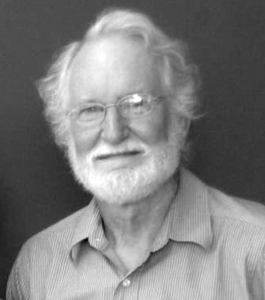
William Seaton - William Seaton is a poet, translator, and critic, the author of Spoor of Desire: Selected Poems and Dada Poetry: An Introduction. Active in poetry performance since sixties happenings, he was a member of the San Francisco Cloud House group in the seventies and produced the Poetry on the Loose series in the Hudson Valley for twenty-one years. Seaton maintains a largely literary blog offering “a blend of thought available nowhere else” at williamseaton.blogspot.com.

William Seaton


William Seaton


See the glyph on th’enameled beetle’s back!

while in the sky the birds pursue their destiny,

quite innocent of thought, their route inscribed

in every cell. They may have lice but rarely doubt.

Each thought a blue shaft like a glacier’s heart,

piercing the gusty land of air with small and similar strokes.

Selflessness like one inside a car caroming,

overturning, yet to hit the final ground.


-William Seaton


***


Developing WPS 2021 Schedule - all readings held via Zoom

All of 2021 Events: Events


Due to the ongoing pandemic - for now, all meetings will be held virtually via Zoom

The Zoom app can be downloaded here: Zoom Download Center


To attend: contact phillip@woodstockpoetry.com

If attending, please indicate if you would like to be on the open mike following the featured readers. Thank you.


01/January 9th - Canceled

02/February 13th - Canceled

03/March 13th - Guy Reed; Victoria Sullivan via Zoom

04/April 10th - Judith Kerman; Leslie Gerber via Zoom

05/May 8th - Judith Saunders; Raphael Kosek via Zoom

06/June 12th - Elizabethanne Spiotta; William Seaton via Zoom

07/July 10th - Barbara Ungar; Lucia Cherciu via Zoom

08/August 14th - Irene Sipos; Perry S. Nicholas via Zoom

09/September 11th - Nine-Eleven 20 years later via Zoom

                                          To present during this event - email: phillip@woodstockpoetry.com

10/October 9th - Philip Pardi; TBA via Zoom

11/November 13th - Elizabeth Cohen; Mary Leonard via Zoom

12/December 11th - Amy Ouzoonian; Anique Taylor and Annual Business Meeting via Zoom


Also, why not become a 2021 Member or donate to the Woodstock Poetry Society?

Membership is $20 a year. (To join or donate, send your check to the Woodstock Poetry Society, P.O. Box 531, Woodstock, NY 12498. Include your email address as well as your mailing address and phone number. Or join online at: www.woodstockpoetry.com/become.html). Your membership helps pay for our upgraded Zoom account, post-office-box rental, the WPS website, and costs associated with publicizing the monthly events. One benefit of membership is the opportunity to have a brief biography and several of your poems appear on this website.

Thursday, February 4, 2021

Rubee Rancourt Interviews William Seaton on His New Book “Planetary Motions”


photo of William Seaton by Dan Wilcox


Rubee Rancourt: Giant Steps Press has just published your new book of poems, Planetary Motions. Would you to share what inspired you to become a writer and how your academic experience influenced your voice as an author?


William Seaton: Ah well, I was inspired by the poetry of Freddy the Pig in Walter R. Brooks’ children’s books and the scintillating display of the playful potential of words in Walt Kelly’s Pogo comic strips.  As a child I passed a bit of time with the likes of Ogden Nash and Robert Service, but I was interested in everything then including the sciences.  By middle school I had decided that the likeliest professions I might follow were religious mystic (I loved the Evelyn Underhill books), socialist revolutionary (on the model of the Wobblies), or poet.  I suppose I selected the most practical choice of the three. 


Just as I was approaching adolescence, the Beat writers were attracting attention even from those who never read a word of their writing, and by the time I was in high school I was attending Paul Carroll’s Big Table readings at Second City in Chicago.  Then followed the hip youth movement of the sixties when I went to the Haight-Ashbury in the days when we wanted not only to write great poetry but also to transform society.  We declaimed poetry in the streets and strove to make each act of daily life into art.


As for academe, some may conceive the ivied halls as an isolated and remote realm, but for me it opened up the globe and the centuries past.  I spent an absurd amount of time living on pennies in graduate school, but that allowed me to study many languages, dead and alive, and to feast on the broadest variety of writing while living on scholarships, fellowships, and assistantships. 


The traditional canon is not, however, sufficient.  To learn the real nature of literature requires familiarity with work outside the English Literature curriculum.  To know what poetry can do one must know not only Keats, but Du Fu and Kalidasa and blues songs and anthropological reports of oral texts. 


I did not always fit in.  When I showed some Sappho translations to my Greek professor and asked his opinion. he said that he could not comment as he really cared little for poetry.  In the most advanced Classics seminars we never did more than translate, construe, and note unusual forms.  I am grateful for the knowledge gained through historical philology, but my goal was simply to read poetry.


Rubee Rancourt: You have been able to live what many consider a nontraditional lifestyle. Taking into account this unique lens on the world, what would you say has been the most impactful lesson or experience that has stayed with you throughout your writing career?


William Seaton: My inclination was clear from the start.  I happen to have a college application essay I wrote ever so long ago.  Probably imprudently, I said nothing about any specific career but simply said I wished to learn as much as possible and experience as much as possible.  I was quite honest – I despaired of ever earning a living, so I pursued other goals.  Although I led a gypsy career and never made much money, I cannot complain. 


When I graduated from university and married my dearly beloved, she and I agreed that our first priority, apart from my evading the draft, was to see the world, so we worked as long as necessary, living on the super-cheap, and then spent almost a year in Europe and North Africa.  Since then we have traveled all over and lingered to teach in West Africa.  The experience of seeing up close how other people live, checking out other cultures’ visions, is really akin to reading which can place your consciousness suddenly in another gender or country or era.  If there is a lesson available, it is probably “there are many ways to be human.”  Second lesson is “all those ways have a lot in common.”


Rubee Rancourt: One of the many things that I appreciate about your work is the humor with which you convey deeper messages to your audience. Where does the inspiration for your humor come from and how would you say your authorial voice has evolved over the process of writing your books?


William Seaton: I regret the decay of light poetry.  Poetry today is often passionate and loud when it isn’t too cool for any affect.  Humor is highly poetic, using multiple meanings, wordplay, and sudden realizations for effect.  Both the visionary and the comedian depend on poking and sometimes overturning preconceptions.  Looking around in a slightly pixilated state of mind, leads to goofing in the sense of Philip Whalen’s Goof Book, looking at the world agog and grinning, recreational living, one might say.  In performance, the most certain ways to stir an audience are transgressive sexual content, revolutionary social content, and humor.  The last has, perhaps, the best chance of lasting impact. 


Everyone has a unique voice, of course, and in the case of a writer there is the additional complication that the mind on the page is mediated by words and cannot be identical to the thought.  Since Shelley: “I fall upon the thorns of life!  I bleed!” lyric poetry has often been self-dramatization.  In Planetary Motions I have included several kinds of poems I had earlier excluded from collections as lacking gravitas.  Let multiple voices coexist!  I tend to shrink from the single continuous confessional voice, but language is such a subtle instrument that the ego always shows up on the page.  Think of Fernando Pessoa, the Portuguese poet who wrote using dozens of personae with different names, styles, and ideas, but he is still discernably there behind each of them. 


Rubee Rancourt: When reading “How to be a Poet” I was most impressed with the line “Think of when you’ve been highest and lowest and what the colors of the planets smelled like then.” What would you like people to take away after reading your books? And what would you say to other aspiring writers who wish to explore the world of poetry?


William Seaton:  In my opinion writers have no privileged access to reality.  All anyone can do is to record flashes of consciousness accurately enough that the reader might sympathetically see through the author’s eyes.  A precise description of an experience of the world will be beautiful because people find humanity, the world, and the cosmos beautiful in the end, terrifying, too, but beautiful.  Somehow in the end even tragedy and suffering may be redeemed by art.  As the Buddha realized, we cannot alter the conditions of existence, but we can alter our own minds. 


As for advice to aspiring writers, I would begin with the old prudential cliché “don’t go into the arts unless you can’t help yourself.”  If you do, blessings upon you.  Poetry is a performance skill, like lifting weights.   Regular practice is the way to improve.  Reading and workshops may play a role, but writing is the way to get better at writing. 

photo of William Seaton by Celia Seaton

Sunday, November 8, 2020

GSP Announces Publication of William Seaton's Planetary Motions


(Freeport, NY) Giant Steps Press is pleased to announce the publication

of Planetary Motions, a new book of poetry from Hudson Valley writer William Seaton. The volume includes lyrics written since the author’s last collection Spoor of Desire as well as Seaton’s sound poems, which he calls “adult nursery rhymes,” and translations from German, Greek, Latin, and French. In the foreword Seaton describes his works as “snapshots of consciousness reflecting glints of shattered truth which I wave in the dark like a blessedly naïve child with a sparkler.” 

In advance reviews Kirpal Gordon praised “the music these poems make and the momentum they create” with a “just-so-ness of phrase and sound.”  Steve Hirsch said Seaton reveals “new heart-treasure and insight into who we are.”  For Janet Hamill “he establishes an elegant pattern with this kaleidoscope of words.” 

Seaton has long been active in the Hudson Valley poetry scene.  He ran the Poetry on the Loose Reading/Performance Series, co-founded the Northeast Poetry Center and taught in its College of Poetry, and worked with the Seligmann Center for the Arts, producing numerous artistic and scholarly events including the Surreal Cabarets of performance art.  He maintains a “largely literary” blog at williamseaton.blogspot.com.

The book is available from Amazon at https://www.amazon.com/dp/B08MS5KNJB/ref=sr_1_1?dchild=1&keywords=seaton+planetary+motions&s=books&sr=1-1.  

Founded in 2011, Giant Steps is a small New York City press named in tribute to the classic John Coltrane album, specializing in publishing books on jazz and jazz-influenced poets. 


Friday, August 21, 2020

An eye to Ganga Ma from William & Patricia Seaton


Mahashamsana
 
(Varanasi is sometimes called by this name
when regarded as the great cremation ground
for the corpse of the universe.  During nightly
services at the Dasaswemedh Ghat, worshippers
set tiny candles afloat.)
 
I walked the ghats with holy men and touts,
and monkeys eyeing every scrap of food.
The river Shiva loved flows by obscure
with corpses, chemicals, and shit.  The god
must grin at dissolution bright and fine
and welcome every shred of tender flesh,
though Mother Ganges hardly could care less,
indifferent, hosting pathogens and fish,
and bearing the brief flame of every wish.

(poem by Willian Seaton from Planetary Motions; photo by Patricia Seaton)

Sunday, August 2, 2020

from William Seaton's soon-to-be-released PLANETARY MOTIONS


photo by Celia Seaton

His thoughts flowed
inevitable though irregular
like the veining in a fly’s wing
seen through a child’s first microscope,
looking very like a new-found-land,
with aboriginal sages and wondrous novel fruits,
in colors never seen before, now echoing still half a lifetime later,
and shedding still some light even at the fallen depth
of middle age;
 
like a watershed from the heavens’ view
with nestled vales and sudden rights and lefts,
with unexpected islands that loom up and have their day and vanish
ingenious muskrats like the one that first built earth up out of mud;
 
those thoughts flowed very like the wind
that takes each turn that comes along the way
and skims on top of fast food sheds and cars and busy men,
seeking some Zephyr in the stratosphere, some sweet high air
above the birds and plans, with which to mix and drift

Wednesday, July 8, 2020

"Chichería" by William Seaton (from PLANETARY MOTIONS)

Photo by Patricia Seaton 
(it was election day in Peru and the peasants were in town from the hills to vote and have a few drinks)


Chichería


Red plastic bag like refuse marks the chichería,

its benches half the breadth of my behind.

This shed I think was built in just a day –

a few good kicks would turn it to debris,

and yet I think the place must serve up hope.

I’m seated with the rest to seek my share.


A chichería is an unlicensed establishment

selling the indigenous people’s homemade

beer, usually based in corn. 

Monday, March 16, 2020

"Place de l'Horloge, Avignon" by William Seaton

photo by Patricia Seaton


Place de l'Horloge, Avignon


Beneath the fourteenth century Gothic clock

where animated figures strike the hour

the double-decked old carousel turns round.

Its horses' riders grin and laugh and wave.

Some ride above the others, some below,

some sit on steeds and some on frogs and some

on swans or pigs or ornamented thrones.

And all around are lovely painted scenes

of heroes, quiet ponds and mountain heights

that -- were they not so fine -- could all be real.

The riders speed along and go nowhere.

(Their motion by itself is motive too.)

Each face betrays a soul absorbed in what

is happening just then. This must be wise.

But when the music stops -- it always is

too soon -- the children know the jig is up.

They then descend a few more minutes old.

They've passed the time and I’ve done nothing more.


William Seaton, from his forthcoming collection, Planetary Motions, Giant Steps Press